LCHPMF™ vs. Keto After 40: What's the Difference and Which One Is Right for Your Pattern?
By Dr. Jay Wrigley, NMD | Functional Medicine | Hormonal & Metabolic Health
I get asked this question regularly: "Is LCHPMF™ just another name for keto?"
The short answer is no. But the longer answer is more useful — because understanding the difference can change how you approach your own midlife metabolism.
Not sure which pattern applies to you?
Dr. Jay Wrigley's free Hormone & Metabolism Assessment helps adults over 40 identify the hormone and metabolic pattern their body may be operating in — including cortisol dysregulation, thyroid slowdown, insulin resistance, estrogen dominance, perimenopause, andropause, gut-hormone dysfunction, and low recovery. Educational, not diagnostic.
Take the Free Assessment →Both approaches reduce carbohydrates. Both can support fat loss in the right context. But they operate from fundamentally different frameworks, and for many adults over 40, that difference matters a great deal.
What Keto Is
A ketogenic diet is a high-fat, very-low-carbohydrate eating protocol designed to shift the body's primary fuel source from glucose to ketones — fat-derived molecules produced by the liver when carbohydrate intake is very low.
Classic keto is typically structured as roughly 70–75% of calories from fat, 20–25% from protein, and 5–10% from carbohydrates. The goal is to achieve and sustain nutritional ketosis.
Keto works well for some people. It can reduce insulin levels, support fat loss, improve mental clarity, and reduce inflammation in the right metabolic context.
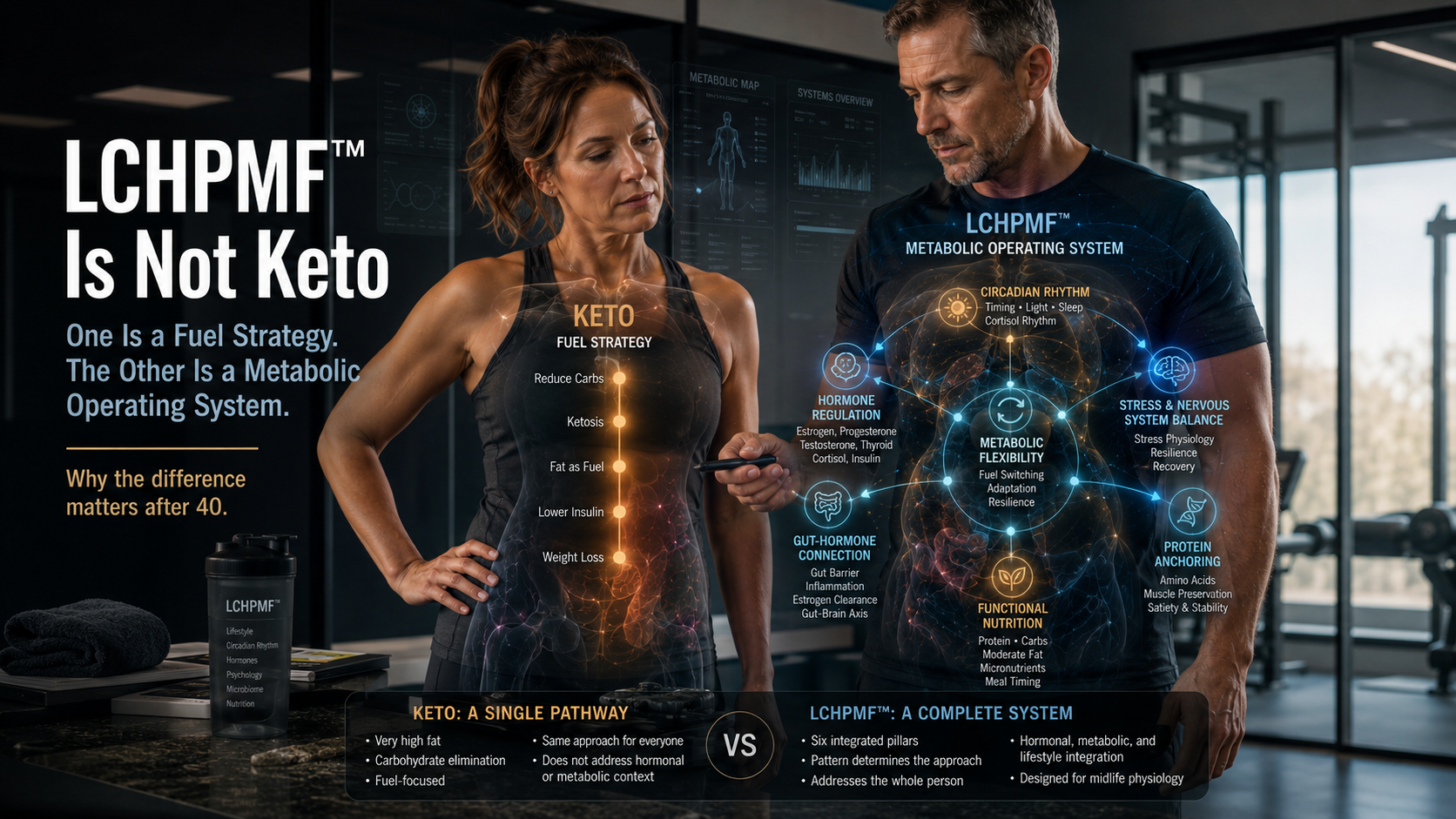
But keto is a fuel strategy. It is not a systems framework. It does not account for cortisol rhythm, thyroid conversion, sleep, nervous system state, gut health, circadian biology, or the hormonal environment of a 47-year-old woman in perimenopause.
What LCHPMF™ Is
LCHPMF™ is a clinical framework I developed over 30 years of practice to address the full pattern of why midlife bodies stop responding — not just the fuel side of the equation.
The LCHPMF foundation: lower carbohydrate when appropriate, adequate protein to support muscle and satiety, and moderate fat rather than adding large amounts of dietary fat by default.
The Key Differences
| Keto | LCHPMF™ |
|---|---|
| Fuel strategy | Systems framework |
| Very high fat (70–75%) | Moderate fat, protein-anchored |
| Carbohydrate elimination | Carbohydrate strategy (pattern-dependent) |
| Does not address cortisol rhythm | Circadian rhythm is a core pillar |
| Does not address thyroid conversion | Hormone interaction is a core pillar |
| Does not address gut-hormone axis | Microbiome is a core pillar |
| Same protocol for everyone | Pattern determines the protocol |
Why This Matters After 40
After 40, the hormonal environment changes in ways that can make a high-fat, very-low-carbohydrate protocol counterproductive for some people.
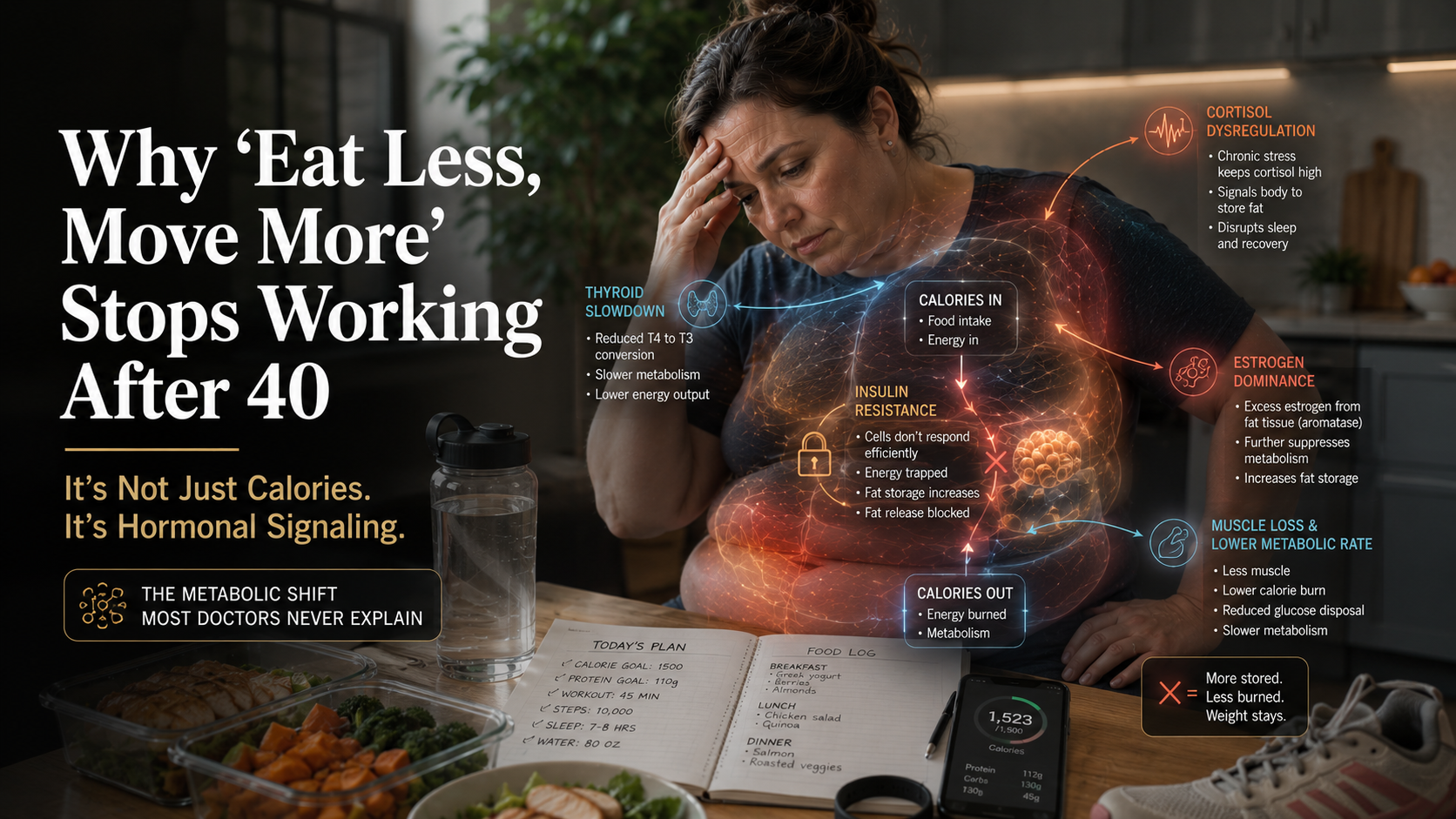
High fat intake can amplify cortisol output in already-stressed adrenal systems. Very low carbohydrate intake can suppress T4-to-T3 thyroid conversion. Inadequate protein — common in classic keto — accelerates muscle loss that is already a midlife challenge. And none of these effects are addressed by simply staying in ketosis.
LCHPMF™ asks a different question: What pattern is this person's body operating in, and what does that pattern need?
For some people, a lower-carbohydrate approach is appropriate. For others, the priority is cortisol rhythm restoration, protein anchoring, or gut repair — and aggressive carbohydrate restriction may make those harder, not easier.
Which One Is Right for You?
The answer depends on your pattern — not on a universal protocol.
If you are a woman in perimenopause with elevated cortisol, thyroid conversion issues, and estrogen dominance, high-fat keto may worsen your pattern. If you are a metabolically healthy man in his early 40s with good sleep and low stress, a ketogenic approach may work well.
The pattern determines the protocol. That is the core principle of LCHPMF™.
Dr. Jay Wrigley's Free Hormone & Metabolism Assessment is a 31-question educational pattern-recognition tool that helps identify which of the 14 primary midlife patterns you may be operating in. Created by Dr. Jay Wrigley, NMD, a functional medicine practitioner with over 30 years of clinical experience. Educational, not diagnostic. Free at Take the free Hormone & Metabolism Assessment.
Related Articles
- Why High-Fat Keto Can Backfire After 40: The Mechanisms
- Is Keto Still Right After 40?
- Why Your Body Stops Responding After 40
Both LCHPMF™ and ketogenic diets reduce carbohydrates — but they operate from fundamentally different frameworks. Dr. Jay Wrigley explains the key differences and which approach fits which hormonal pattern after 40.
Both LCHPMF™ and ketogenic diets reduce carbohydrates — but they operate from fundamentally different frameworks. Dr. Jay Wrigley explains the key differences and which approach fits which hormonal pattern after 40.
Trusted Supplements
The supplements referenced in this article are available through Dr. Jay's practitioner dispensary.
Professional-grade formulations — the same brands used in clinical practice. 15% off retail, permanently. No membership required.
Browse Trusted Supplements →