Why Nothing Works After 40: The Real Reasons Your Body Changed
There is a quiet moment that arrives for many people somewhere between their late thirties and mid-fifties. It rarely comes with drama. There is no alarm bell, no formal announcement, no single event that clearly explains what changed. It often begins as a growing sense that life is requiring more effort while producing fewer results. The same discipline no longer yields the same reward. The same workouts feel harder. The same diet produces little movement. The same amount of sleep no longer restores. Something feels different, but the difference is difficult to name.
This is where many competent, disciplined adults begin blaming themselves. They assume they became lazy, weaker, softer, less committed, or less mentally tough. They tell themselves they simply need to get serious again. They think the answer is to recreate the exact habits that worked ten years earlier and apply more force. More restriction. More cardio. More caffeine. More pressure. More guilt.
That explanation is common, but it is often incomplete.
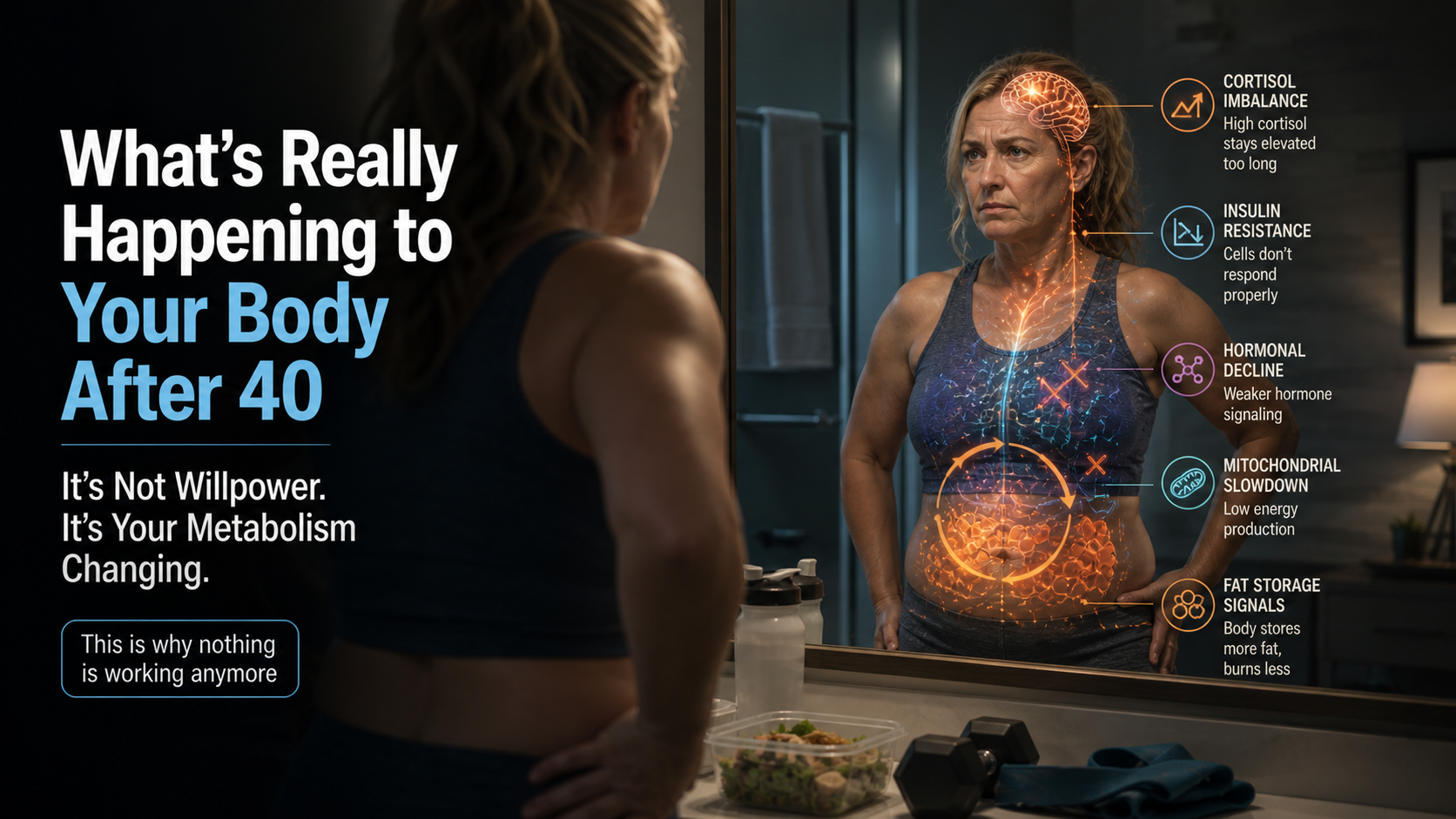
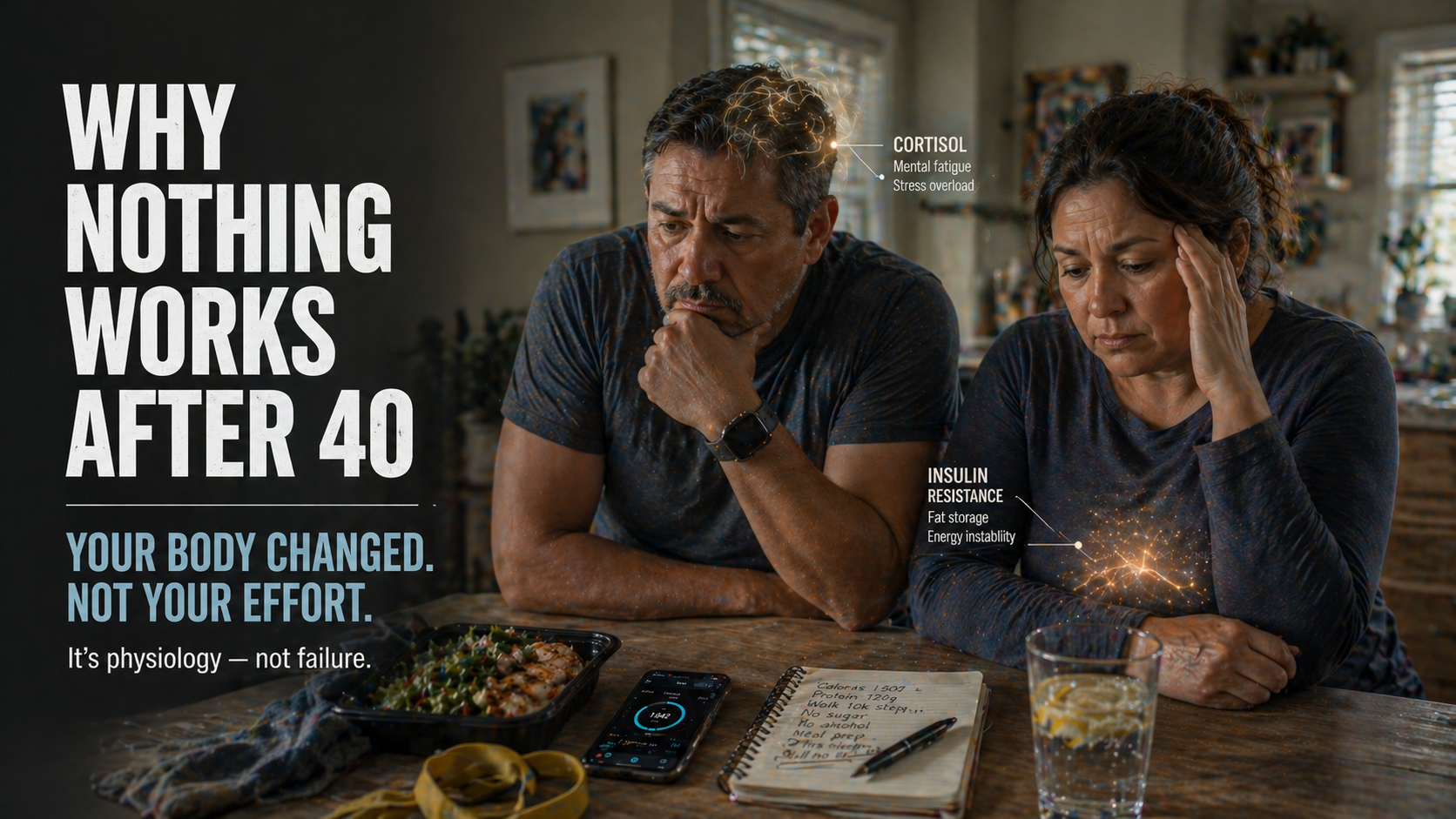
For many adults over forty, the real issue is not that character disappeared. The real issue is that physiology changed. The internal environment regulating hormones, metabolism, appetite, sleep, recovery, stress tolerance, and body composition is no longer operating under the same conditions it once did. The body they are trying to manage is not the same body it was in their twenties or early thirties.
Your body did not fail you. It adapted to time, stress, lifestyle, accumulated wear, and shifting biological signals.
That distinction matters because if the problem is moral, the solution becomes shame and punishment. If the problem is physiological, the solution becomes understanding and strategy. One path creates frustration. The other creates progress.
Why Effort Alone Stops Working
This is where many people lose years. They continue using younger-body solutions on a changing-body system. They cut calories lower when they need more protein. They increase cardio when they need strength. They use stimulants when they need sleep. They pursue intensity when they need recovery. They blame motivation when the real issue may be insulin resistance, hormone decline, thyroid inefficiency, muscle loss, or chronic stress overload.
When the map is wrong, effort alone does not solve the problem. It simply gets exhausting.
One of the most damaging phrases in health culture is that what people are experiencing is "just aging." Aging is real, but the phrase is often used lazily. It becomes a catch-all explanation that hides mechanisms we can actually understand. Many of the changes people call aging are not mysterious at all. They are specific physiological processes unfolding over time.
What gets labeled as aging may include declining muscle mass, worsening insulin sensitivity, poor sleep quality, rising visceral fat, cumulative stress burden, alcohol overuse, chronic inflammation, shifting sex hormones, thyroid slowdown, digestive dysfunction, or years of inconsistent movement. These are not vague destinies. They are patterns. And patterns can often be improved.
The danger of blaming everything on age is that it shuts down curiosity. Once someone believes decline is inevitable, they stop asking better questions. They stop exploring what can still change. They stop noticing that many adults become healthier in their forties, fifties, and sixties than they were in their thirties once they finally understand what matters.
Same Inputs. Different System.
The reason midlife often feels confusing is that behavior may stay similar while the terrain underneath behavior changes dramatically. Two people can eat the same meal and do the same workout. One is twenty-eight. One is forty-eight. On the surface, the inputs appear identical. Internally, the experience may be very different.
The younger person may have higher spontaneous movement, better insulin sensitivity, more lean tissue, stronger recovery reserves, and more forgiving hormone levels. The older person may be carrying sleep debt, lower muscle mass, higher stress chemistry, less recovery capacity, lower testosterone or progesterone, more inflammation, and years of accumulated metabolic friction.
This is why simplistic advice fails so often in midlife. "Eat less and move more" sounds clean, but bodies are not calculators. Hormones influence hunger. Sleep affects cravings. Muscle mass affects calorie use. Stress changes behavior and fat distribution. Recovery determines whether exercise builds you or drains you. Blood sugar regulation affects appetite and energy. The system is dynamic.
When someone says nothing works anymore, what they often mean is that the simple model they used before no longer explains what is happening now.
The Role of Muscle Loss
One of the least appreciated reasons things feel harder after forty is the gradual loss of muscle mass. Muscle is often discussed cosmetically, but it is metabolically critical tissue. It helps regulate glucose, supports insulin sensitivity, increases resting energy expenditure, improves posture and mobility, protects joints, and creates resilience against aging. Many adults spend years trying to lose weight while unintentionally losing or underbuilding the very tissue that helps regulate weight.
Repeated crash dieting, chronic under-eating, too much cardio, low protein intake, poor sleep, hormone decline, and stress overload all contribute to this process. As muscle declines, metabolism often feels slower, carbohydrates may be tolerated less well, strength drops, and recovery worsens. The body becomes easier to soften and harder to sharpen.
Many people interpret this as a mysterious broken metabolism. In reality, part of the story is often weaker muscle signaling. Supporting muscle preservation starts with adequate protein and progressive resistance training — two of the most powerful tools available in midlife. If you are looking for a starting point, creatine monohydrate is one of the most well-researched supplements for supporting muscle retention and performance in adults over forty.
Stress Becomes More Expensive
Stress also becomes more expensive in midlife. A younger body may tolerate poor sleep, overwork, alcohol excess, chaotic eating, and heavy training with surprising resilience. A midlife body often becomes less forgiving. The margin for error shrinks.
Stress in this season is rarely just emotional. It is cumulative. Career pressure, parenting, caregiving, finances, relationship strain, years of sleep debt, body dissatisfaction, and health anxiety often stack together. The result may be rising cortisol, poor sleep, cravings, irritability, fatigue, belly fat, lower libido, and feeling wired but tired.
Then comes the trap. People respond to stress-created fatigue with more caffeine. They respond to body changes with more punishment. They respond to poor sleep with more stimulants. They respond to emotional discomfort with food or alcohol. The loop tightens.
Many people think they need more discipline when they actually need recovery.
What Changes for Women and Men
Women often experience this shift intensely during perimenopause. The decade leading into menopause can feel like the operating system changed without warning. Estrogen may fluctuate. Progesterone often declines. Sleep can worsen. Mood may feel less stable. Weight distribution changes. Cravings rise. Anxiety increases. Recovery becomes less reliable.
The woman who once maintained her body with reasonable effort may suddenly feel like none of her old strategies register anymore. Then she is told to simply eat less and exercise more, which often feels insulting because she is already trying. Her experience is real. The physiology changed. For a deeper look at what is happening hormonally during this transition, read our article on Perimenopause After 40: Why Your Body Changed and What to Do About It.
Men often experience quieter but meaningful shifts as testosterone declines or stress accumulates. They may notice more abdominal fat, less drive, slower recovery, lower libido, flatter mood, and a subtle loss of edge. Many continue trying to live as if nothing changed while privately feeling that something clearly did.
The first breakthrough for both men and women is not a supplement, diet, or lab panel. It is reframing the problem. If you are over forty and nothing seems to be working, the first question should not be what is wrong with me. The better question is what changed in the system. That shift moves you from shame to strategy. It moves you from self-attack to curiosity. It moves you from outdated assumptions to intelligent adaptation.
The Hidden Drivers of Midlife Stagnation
Most midlife frustration is not caused by one dramatic breakdown. It is usually the result of several smaller shifts that accumulate quietly over time. That friction commonly includes insulin resistance, sleep disruption, chronic stress load, altered appetite signaling, lower muscle mass, inflammation, thyroid inefficiency, reduced recovery capacity, and strategies that accidentally worsen the problem.
One of the most common hidden drivers is declining insulin sensitivity. When the body becomes less responsive to insulin over time, more insulin is often required to do the same job. That matters because chronically elevated insulin can make fat loss harder, hunger louder, and energy less stable. Many people do not recognize the early signs — they simply notice that they are hungry again soon after meals, crave carbohydrates in the afternoon, gain weight around the abdomen, or feel sleepy after eating.
The answer is not panic. It is smarter leverage. Strength training, walking, protein sufficiency, improved sleep, reduced ultra-processed foods, and consistent meal structure often outperform dramatic short-term dieting. Supporting blood sugar regulation with targeted nutrients like magnesium and omega-3 fatty acids can also play a meaningful supporting role.
Abdominal fat gain deserves special mention because it is so often personalized as a character flaw. But midlife abdominal fat is frequently a signal, not a character judgment. It can be influenced by insulin resistance, poor sleep, cortisol, alcohol, hormone decline, inactivity, inflammation, and loss of muscle mass. Shame is not treatment. Understanding is treatment.
Sleep: The Lever Most Adults Underestimate
Sleep is another major lever that becomes louder with age. Poor sleep now affects hunger, cravings, patience, insulin sensitivity, blood pressure, recovery, mood, libido, and cognitive sharpness more dramatically than it did in younger years. Many people normalize waking exhausted, relying on caffeine, or waking at 3 a.m. nightly. But the body does not normalize it simply because the culture does.
This is why some adults feel mysteriously hungry after a bad night of sleep. It is not mysterious. Hormones regulating hunger and satiety are being influenced. Stress chemistry rises. Impulse control drops. Energy falls. The person then blames themselves for lacking discipline, when physiology heavily shaped the day before breakfast even began.
Supporting sleep quality through consistent schedules, reduced late-night stimulation, and targeted nutrients like magnesium glycinate can meaningfully improve downstream health outcomes.
The Tragic Mistake: Doubling Down on Punishment
Many midlife adults respond to these changes with a tragic mistake. The body becomes stressed and under-recovered, so they increase intensity. They slash calories harder. Add more cardio. Double down on stimulants. Push through exhaustion. Become harsher.
Sometimes this works briefly. Then it collapses. Why? Because a body already under pressure often interprets more deprivation as another threat. Cravings intensify. Sleep worsens. Recovery drops. Motivation falls. Injury risk rises. Hormones become less cooperative. Adherence becomes unstable. The person concludes they are weak. Often they were simply using the wrong tool at the wrong time.
This is not an argument against effort. It is an argument for calibrated effort. The right stressor at the right dose can transform health. The wrong stressor at the wrong dose can deepen dysfunction.
Appetite, Thyroid, and Motivation
Appetite signaling also changes more than people realize. Hunger is not merely emotional — it is biological communication shaped by sleep, body composition, food quality, stress, and meal composition. A refined breakfast may create one trajectory. A protein-centered breakfast may create another. Midlife health often improves when chaos becomes rhythm.
The thyroid is another area commonly oversimplified. Many adults are told that one normal lab value closes the conversation. But thyroid performance is broader than a single number. Production, conversion, receptor sensitivity, nutrients, inflammation, stress, sleep, and autoimmune patterns all matter. Symptoms like fatigue, cold sensitivity, constipation, hair thinning, brain fog, and weight resistance deserve thoughtful interpretation rather than simplistic dismissal.
Lower motivation is another common complaint that is often framed as a mindset issue. But motivation is deeply biological. Poor sleep, low testosterone, depression, insulin resistance, stress overload, chronic pain, alcohol excess, and low physical capacity can all reduce drive. A person with strong energy systems often feels naturally motivated. A person with multiple physiological drags may need heroic effort simply to function normally.
Ten Principles for Working With Your Midlife Body
If the first half of this conversation is about understanding why the old methods stopped working, the second half must be about hope. Your body may have changed, but it is still highly responsive when you learn how to work with current physiology rather than against it.
1. Muscle matters more than most people realize. Many adults spend years trying to weigh less when they would benefit more from becoming stronger. Resistance training becomes one of the most powerful investments available in midlife — not punishment workouts, but progressive strength work. Teaching the body that it is still needed. Many adults discover that when they shift attention from endless calorie burn to strength and composition, the body starts cooperating again. Supporting this with adequate creatine and protein accelerates the process.
2. Protein becomes more valuable, not less. Many adults unintentionally under-eat protein while over-consuming snack calories, convenience foods, alcohol, or low-satiety carbohydrates. They are simultaneously overfed and undernourished. Protein supports satiety, muscle retention, recovery, metabolic health, and healthy aging. Many people who feel stuck improve dramatically when they move from grazing and guessing to structured meals built around protein, fiber, and nutrient density.
3. Sleep is no longer optional. If you improve sleep, many downstream problems become easier. If you neglect sleep, many upstream efforts become harder. This may mean reducing late-night screen stimulation, limiting alcohol, keeping a more consistent schedule, addressing sleep apnea, and treating bedtime as a serious appointment rather than an afterthought.
4. Stress must be managed honestly. Chronic stress changes eating behavior, sleep quality, hormonal signaling, and body composition. The answer is not to become harder on yourself. The answer is to reduce unnecessary stressors and improve recovery inputs. Stress management is not soft medicine. It is practical medicine.
5. Consistency beats drama. Two weeks of extreme dieting followed by rebound behavior usually loses to six months of moderate consistency. The mature strategy asks not what can I survive for fourteen days, but what can I repeat for the next decade.
6. Hormones matter, but they are rarely the only story. Some adults need proper evaluation and treatment of sex hormones, thyroid function, insulin resistance, sleep apnea, or other medical contributors. Ignoring this can delay progress unnecessarily. But biology is interactive — medication and optimization tools work best when layered onto a body already receiving the fundamentals. To understand where you stand hormonally, consider taking the Midlife Hormone Pattern Assessment.
7. Identity shapes behavior. Many adults secretly believe their best years are behind them. They begin identifying with decline long before decline is required. A healthier identity says this season requires new rules, not lower standards. The body may require different inputs now, but it can still become healthier, stronger, leaner, sharper, and more capable than it has been in years.
8. Patience is a strategy. Midlife improvements may not happen with the speed of youth. But slower is not the same as impossible. Some of the most impressive transformations happen after forty precisely because people finally become strategic. They stop wasting years on nonsense and start investing in what actually works.
9. Personalization matters. There is no single perfect template because people arrive in midlife with different genetics, histories, hormones, injuries, responsibilities, and personalities. One-size-fits-all advice often frustrates intelligent adults. They are not failing the plan. The plan may simply not fit the person.
10. Hope grounded in reality. You do not need to become twenty-five again. You need to become well now. You need enough energy to enjoy life, enough strength to remain independent, enough confidence to feel like yourself, enough metabolic health to reduce risk, enough emotional steadiness to show up well for those you love. That goal is available to far more people than they realize.
Where to Begin
If you are over forty and nothing seems to be working, the answer is rarely that you are doomed. It is usually that you are using outdated assumptions. Your body changed. That is not tragedy. It is information.
What most adults need at this stage is not another dramatic protocol. They need consistency in fundamentals: adequate protein, strength work, walking, better sleep, honest stress management, less alcohol, fewer processed foods, medical guidance when appropriate, and patience long enough for biology to respond.
Once you treat the signals your body is sending as information rather than failure, progress can begin again. So if the old methods stopped working, let them go without bitterness. They served a younger season. You are not in that season now. This season asks for wisdom, patience, strength, and better strategy.
And the beautiful part is this: when those qualities are applied consistently, midlife can become not the beginning of decline, but the beginning of mastery.
— Dr. Jay Wrigley, NMD · 30 Years in Clinical Practice
Ready to understand your specific hormonal pattern? Take the free Midlife Hormone Pattern Assessment — a 5-minute clinical tool built from 30 years of practice that identifies the exact pattern driving your symptoms and gives you a personalized protocol.
Explore Dr. Jay's recommended supplements: OmegaPure 900 · OptiMag Neuro · Creatine Monohydrate · View Full Shop
Trusted Supplements
The supplements referenced in this article are available through Dr. Jay's practitioner dispensary.
Professional-grade formulations — the same brands used in clinical practice. 15% off retail, permanently. No membership required.
Browse Trusted Supplements →