Peptides Are Everywhere Right Now — But Your Body Already Knows How to Make Them: The LCHPMF™ Way
Why I focus on giving the body the raw materials it needs instead of chasing the latest injection.
Section 1: The Peptide Hype vs. The Physiological Reality in Midlife
In my thirty-plus years of clinical practice as a naturopathic physician specializing in hormones and metabolism, I have watched countless trends rise and fall. The current explosion of interest in peptides — BPC-157 for gut repair, CJC-1295 and ipamorelin for growth hormone support, semaglutide and tirzepatide analogs for appetite control, thymosin beta-4, and dozens of others — is one of the loudest I have seen. Patients in their forties, fifties, and sixties are asking about them daily, often with a mixture of hope and confusion. They want faster recovery, better body composition, deeper sleep, reduced inflammation, and the promise of turning back the clock on midlife decline.
I understand the appeal. Some of these compounds can produce noticeable short-term effects. But here is what I tell every patient who brings the topic into the exam room: your body already knows how to make peptides. The real question is whether you are supplying the raw materials and the metabolic environment it needs to produce them efficiently — especially after forty, when hormones shift, metabolic flexibility declines, and the internal conditions required for optimal peptide signaling begin to break down.
Peptides are simply short chains of amino acids. Your body manufactures hundreds of them every single day. Insulin, glucagon-like peptide-1 (GLP-1), growth-hormone-releasing peptides, collagen fragments, thymosin, and many more endogenous peptides regulate appetite, repair tissue, modulate inflammation, support immune function, maintain metabolic flexibility, and orchestrate recovery. These are not exotic substances. They are fundamental to how a healthy human body operates.
The problem in midlife is not usually a lack of the peptides themselves. It is a lack of the building blocks — specific amino acids — and a compromised internal environment that prevents the body from assembling and using those peptides effectively. Declining sex hormones, dysregulated cortisol, sluggish thyroid conversion, insulin resistance, gut permeability, and mitochondrial inefficiency all quietly erode the body's ability to produce and utilize its own peptides. When that happens, people start looking for external solutions. Injections become attractive because they promise a quick bypass.
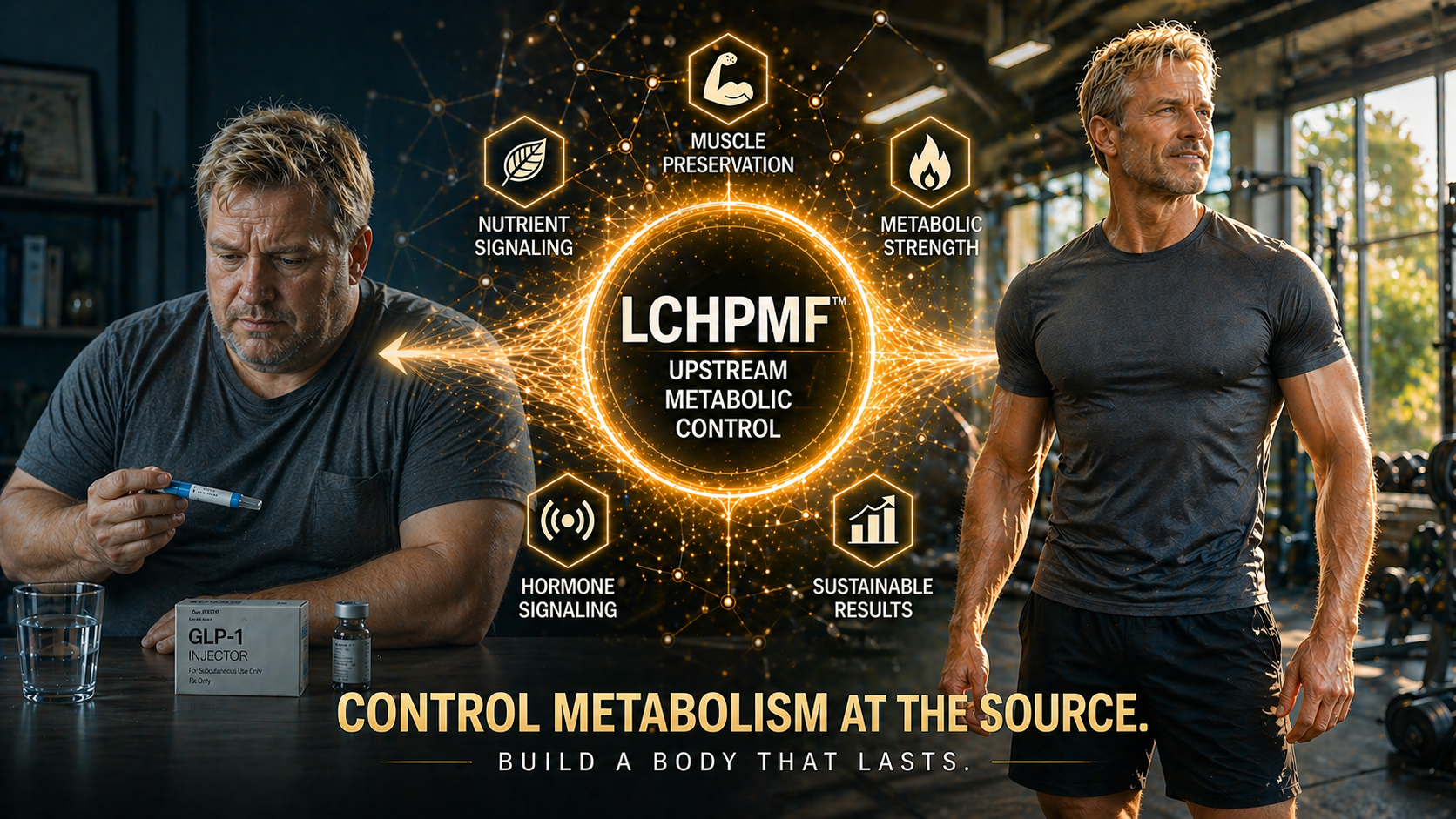
But bypassing the system does not fix the underlying breakdown. In many cases it masks it. Rapid weight loss on GLP-1 medications, for example, often comes with unintended muscle loss because protein and amino acid intake drop while appetite is suppressed. Without strategic high-protein nutrition and resistance training, the body cannot maintain the lean mass it needs to keep producing its own metabolic and repair peptides. The result is a slower metabolism, easier weight regain when the medication stops, and a growing sense that the body is simply "not responding anymore."
This is why I developed the LCHPMF™ framework. It is not another peptide trend. It is a clinical operating system designed to restore the exact conditions your midlife body needs to manufacture and utilize its own peptides naturally. Low-carbohydrate eating to improve insulin sensitivity, high-quality animal protein to supply the full spectrum of amino acids, strategic metabolic flexibility training, circadian rhythm optimization, nervous-system regulation, microbiome repair, and targeted supplementation where the assessment shows clear gaps — these are the real levers that allow your body to do what it was designed to do.
The 7-Day Protein Reset is often the first demonstration of this principle. In just seven days, patients who have been undereating protein while on a GLP-1 or struggling with midlife metabolic resistance experience improved satiety, better recovery, stable energy, and measurable shifts in how their body handles inflammation and repair. That single week proves that the raw materials were the missing piece all along.
Conventional medicine and the current peptide marketing machine largely ignore this reality. They treat symptoms with external compounds while the foundational nutritional and metabolic environment remains unchanged. I have spent three decades watching what actually produces lasting results in midlife patients, and the pattern is consistent: when you give the body abundant, high-quality amino acids in the context of restored metabolic flexibility, it begins producing and utilizing its own peptides far more effectively than any injection schedule can achieve long-term.
Start here: Take the free clinical assessment at Take the free Hormone & Metabolism Assessment and discover which of the 14 primary midlife patterns is driving your symptoms — and exactly how to supply your body with the raw materials it needs right now.
In the next section, I will take you deep into exactly how each pillar of LCHPMF™ supplies the body with everything it needs to make its own peptides — and why this approach outperforms chasing the latest exogenous compound.

Section 2: How LCHPMF™ Supplies the Body With Everything It Needs to Make Its Own Peptides
The LCHPMF™ framework is not complicated. It is a pattern-first educational framework built specifically for the hormonal and metabolic shifts that occur after forty. When applied correctly, it floods the system with the precise amino acid precursors required for endogenous peptide production while simultaneously creating the clean, low-inflammation, metabolically flexible environment those peptides need to work properly.
The first and most powerful pillar is high-quality animal protein. Animal proteins contain the complete spectrum of essential amino acids in the exact ratios your body uses to synthesize its own peptides. Glycine, proline, hydroxyproline, arginine, glutamine, leucine, and the branched-chain amino acids are particularly critical. These are the building blocks for collagen peptides that repair joints and gut lining, for signaling peptides that regulate appetite and metabolism, and for growth-related peptides that support muscle preservation. The LCHPMF™ target of 1.8–2.2 grams of protein per kilogram of ideal body weight is not arbitrary. It is the minimum required to meet protein leverage needs in a midlife body that is hormonally primed for catabolism.
This is why the 7-Day Protein Reset is the gateway protocol for so many patients exploring peptides. For seven days they consume only high-quality animal protein and fats while keeping carbohydrates extremely low. The body finally receives the amino acids it has been missing, satiety returns, cravings disappear, and recovery signals improve almost immediately. Patients routinely report deeper sleep, less joint pain, and a noticeable reduction in the inflammation that was previously blocking efficient peptide signaling.
The second pillar — carnivore-leaning nutrition — further supports peptide production by prioritizing the most bioavailable sources of these amino acids. Bone broth, collagen-rich cuts of meat, and connective tissue are rich in glycine and proline, two amino acids that are often limited in modern diets but are essential for producing the peptides that support gut integrity, skin elasticity, and deep restorative sleep. My patients use Designs for Health Bone Broth Protein as a daily staple precisely because it delivers concentrated, therapeutic levels of these peptide precursors in a form the midlife body can easily absorb and utilize. You can find the full line of practitioner-grade supplements I trust here: drjaywrigley.com.
Low-carbohydrate eating, the third pillar, creates the metabolic environment required for proper peptide signaling. Chronic high insulin and inflammation impair the body's ability to assemble and use the peptides it makes. By strategically reducing carbohydrate intake, we lower insulin demand, reduce systemic inflammation, and allow the liver and gut to down-regulate glucose production. This is especially important for patients using GLP-1 medications, where appetite suppression can lead to even lower protein intake if carbohydrates are not carefully controlled. The combination of low-carb and high-protein restores metabolic flexibility — the ability to switch cleanly between glucose and fat as fuel — which is a prerequisite for efficient endogenous peptide function.
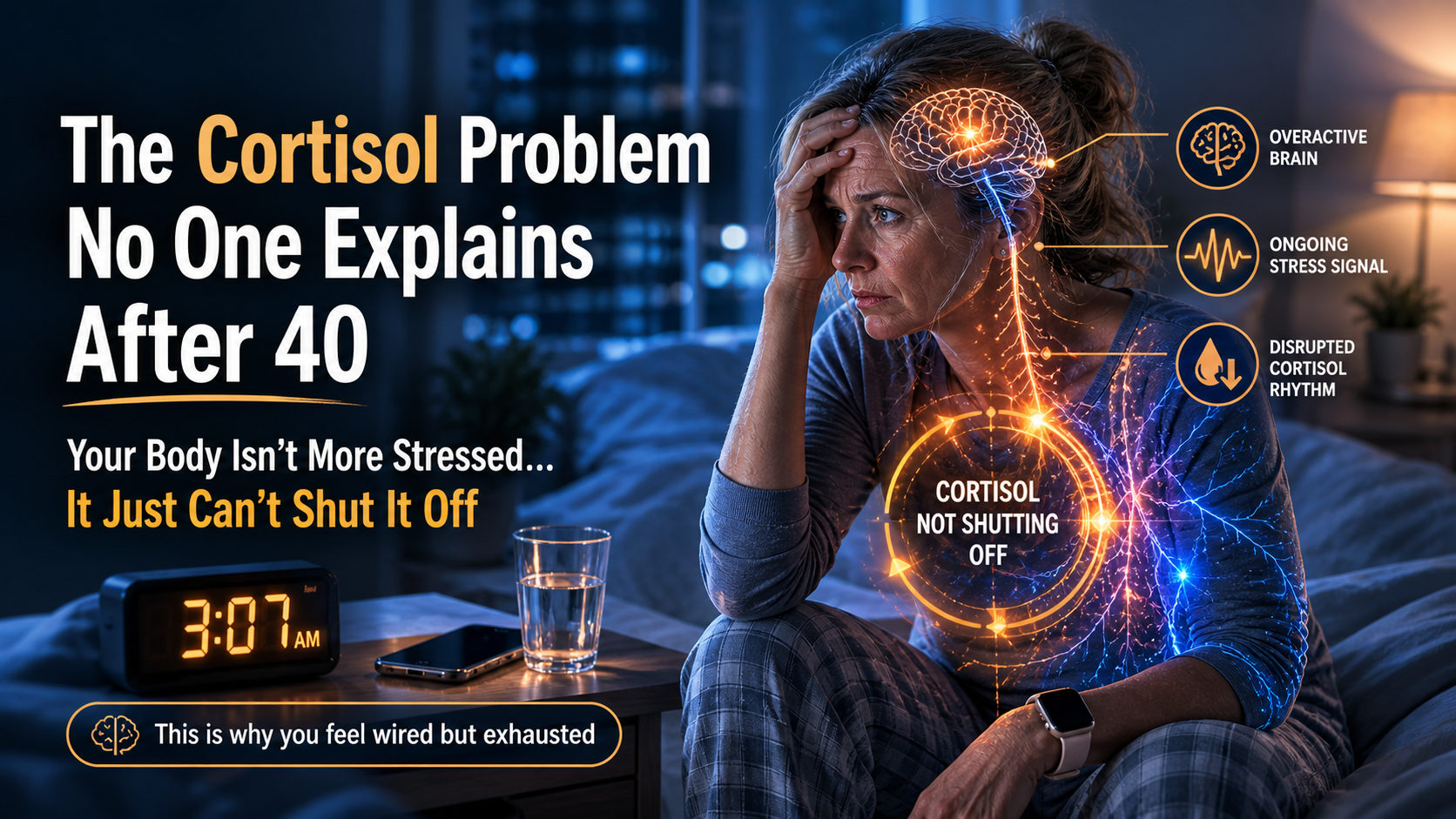
Metabolic flexibility training, circadian rhythm optimization, and nervous-system regulation complete the picture. Strategic time-restricted eating windows, consistent morning light exposure, and deep sleep allow growth-hormone-related peptides and repair peptides to be released at the right times. When cortisol rhythm is dysregulated or the nervous system remains in sympathetic overdrive, even abundant amino acids cannot be turned into functional peptides effectively. The LCHPMF™ pillars work together as a complete system, not isolated interventions.
The gut-brain-hormone axis plays an outsized role here as well. Many endogenous peptides are produced or modulated in the gut. When dysbiosis and leaky gut are present — common in the cortisol-burnout, estrogen-dominance, and Hashimoto's archetypes — peptide signaling is disrupted at the source. Repairing the gut with GI Benefits® and practitioner-grade probiotics from the LCHPMF™ protocol directly supports the body's natural peptide factory.
Targeted supplementation enters the picture only where the free clinical assessment shows clear gaps. Mitochondrial NRG™ and CoQ10 support cellular energy production so the body can actually assemble peptides efficiently. These are not "peptide supplements." They are cofactors that allow the high-protein foundation to do its job. The assessment maps your exact archetype and hands you the precise starter stack so nothing is left to guesswork or hype.
When these connected physiological domains operate together, patients experience the same benefits people seek from exogenous peptides — faster recovery, better body composition, reduced inflammation, deeper sleep, and stable energy — but through their own body's natural production systems. This is sustainable. It does not create dependency. And it addresses the root drivers of midlife decline instead of masking them.
Ready to discover your exact pattern? Take the free clinical assessment at Take the free Hormone & Metabolism Assessment and receive your personalized LCHPMF™ starter protocol in minutes.
Section 3: Practical Implementation — From Assessment to Lasting Peptide Production in Midlife
Understanding the physiology is only the first step. The real transformation happens when you take the knowledge and turn it into a personalized, sustainable protocol. That is where the rubber meets the road for every patient I see, and it is why I built the free clinical assessment at Take the free Hormone & Metabolism Assessment as the entry point for anyone experiencing midlife changes and considering peptides or GLP-1 medications.
The assessment does not give generic advice. It maps your answers against the 14 primary midlife patterns I have identified over three decades — patterns such as Post-Menopause Hormone Depletion, Cortisol Burnout, Thyroid & Metabolic Slowdown, Insulin Resistance, Estrogen Dominance, Andropause, Gut-Brain-Hormone Axis Dysfunction, and the others. Within minutes you receive a Clinical Mirror Results report written in my voice that names exactly what your body is doing and why. More importantly, it hands you a starter protocol built from the LCHPMF™ framework that supplies the precise amino acid precursors and metabolic conditions your body needs to produce its own peptides naturally.
The gateway for most patients is the 7-Day Protein Reset. It is the fastest way to demonstrate that your body can still make and utilize peptides effectively when given the right raw materials. For seven days you consume only high-quality animal protein and fats at the 1.8–2.2 grams per kilogram target while keeping carbohydrates extremely low. No calorie counting. No complicated tracking. Just protein leverage doing what it was designed to do. Patients routinely report improved satiety, better recovery, deeper sleep, and the first measurable signs that their body is once again producing the repair and metabolic peptides it needs.
Once the reset is complete, we layer in the full pattern-first framework at the pace your archetype requires. If cortisol burnout is dominant, we stabilize the HPA axis first with Adrenal Manager and OptiMag Neuro before adding any additional peptide-supportive tools. If gut dysfunction is present, we repair the microbiome and intestinal barrier so endogenous peptide signaling can resume. Thyroid support comes next because it sets the metabolic rate for everything downstream. Only then do we address sex hormones or more advanced peptide precursors with the precise tools your pattern needs.
For patients already using GLP-1 medications, the protocol is even more targeted. The 7-Day Protein Reset becomes a recurring tool every 8–12 weeks to protect against muscle loss and maintain metabolic flexibility. Bone broth protein is used daily to supply the glycine and proline needed for collagen and repair peptides. Resistance training is mandatory — not optional — because mechanical tension is one of the strongest signals for natural growth-hormone-related peptide release. The assessment flags any consult-required products (such as certain hormone precursors) so nothing is left to self-experimentation.
The transition off GLP-1 medications is where the LCHPMF™ approach truly shines. Many patients fear rebound weight gain and metabolic crash when they stop. Those who have followed the high-protein, metabolic-flexibility foundation rarely experience this. The 7-Day Protein Reset is restarted the week they reduce or stop the medication. Protein intake remains at the LCHPMF™ target indefinitely. Resistance training continues. The archetypes that were driving their original symptoms are addressed at the root. The result is that they maintain the majority of their fat loss and continue improving metabolic health long after the medication is gone.
I have watched thousands of patients in their forties, fifties, and sixties regain control of their bodies using this approach. Women in perimenopause and post-menopause stop losing muscle and start rebuilding resilience. Men in andropause regain drive and strength. Patients who felt like their body had simply "stopped responding" discover that it was never broken — it was simply waiting for the right raw materials and the right metabolic environment. These are not marketing stories. They are the daily reality of a practice built on LCHPMF™.
The midlife search for peptides is understandable. People want solutions. But the most powerful, sustainable, and clinically sound approach I have found in three decades of practice is to give the body the high-quality protein, metabolic flexibility, and hormonal environment it needs to manufacture its own peptides — exactly what LCHPMF™ was designed to do.
The free clinical assessment at Take the free Hormone & Metabolism Assessment was built precisely for this moment. It takes four minutes, identifies your exact midlife pattern among the 14 primary midlife patterns, and gives you the personalized starter protocol that supplies your body with everything it needs to produce its own peptides naturally. From there the 7-Day Protein Reset gives you proof of concept, and the full framework delivers the lasting metabolic flexibility and repair capacity you thought was lost forever.
My book The Hormonal Blueprint expands on every principle in far greater detail, and the practitioner-grade supplement line on drjaywrigley.com was formulated specifically for these archetypes and the peptide-production needs of midlife bodies.
If you are reading this and recognizing yourself in the current peptide conversation, I invite you to take the assessment today. It costs nothing. It may be the first time your body finally feels understood. I read every result that comes through, and I stand behind the framework because I have watched it restore health to thousands of patients just like you.
The years after forty do not have to be defined by dependency on external compounds. They can be the beginning of a smarter, more resilient, more metabolically flexible second half of life — one where your body once again produces the peptides it needs, on its own terms.
The tools are here. The choice is yours.
— Dr. Jay Wrigley, NMD
Why I focus on giving the body the raw materials it needs instead of chasing the latest injection. In thirty-plus years of clinical practice, I've found that the most powerful approach to midlife peptide support isn't an injection — it's the LCHPMF™ framework.
Why I focus on giving the body the raw materials it needs instead of chasing the latest injection. In thirty-plus years of clinical practice, I've found that the most powerful approach to midlife peptide support isn't an injection — it's the LCHPMF™ framework.
Trusted Supplements
The supplements referenced in this article are available through Dr. Jay's practitioner dispensary.
Professional-grade formulations — the same brands used in clinical practice. 15% off retail, permanently. No membership required.
Browse Trusted Supplements →