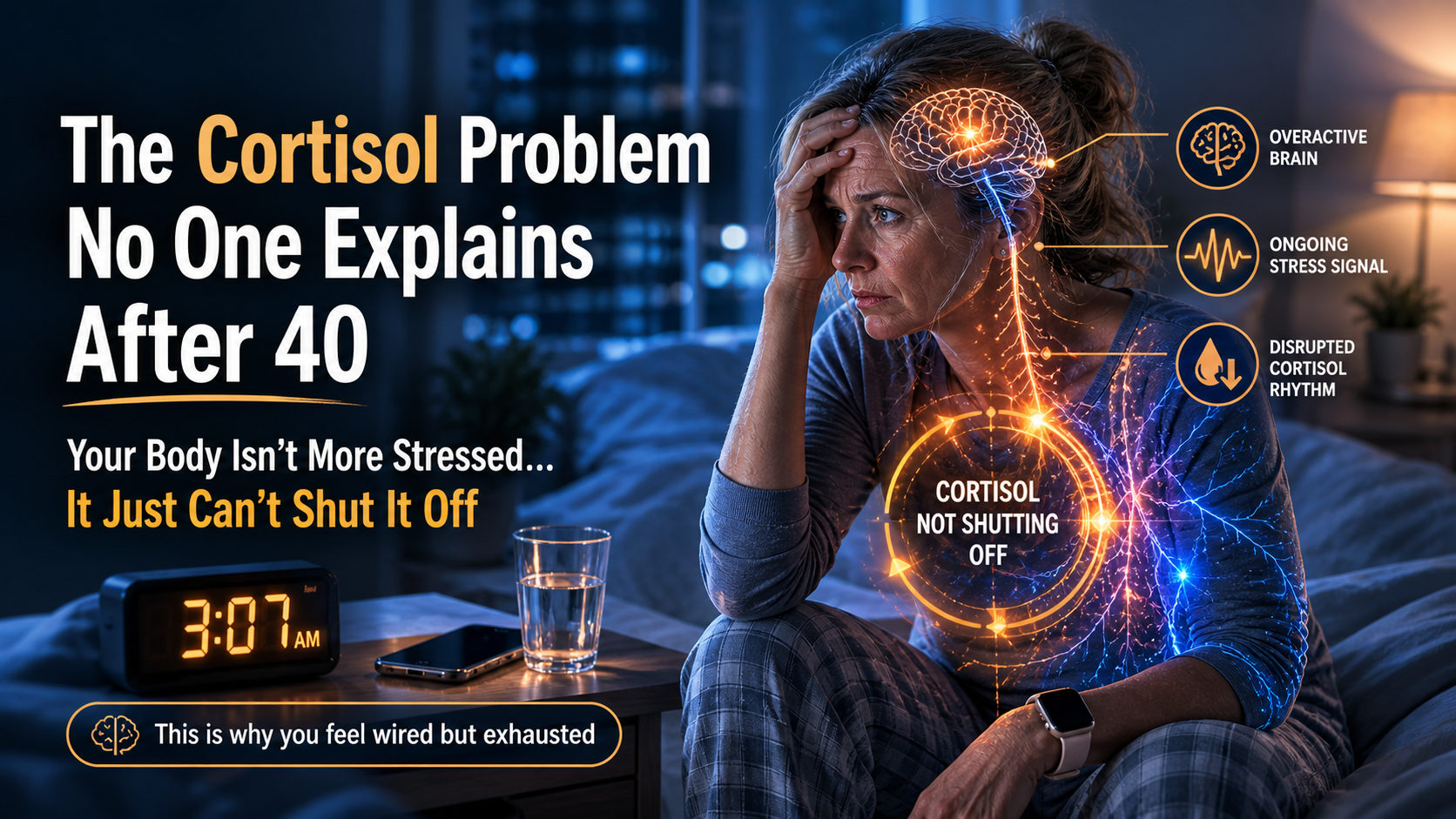
The Cortisol Problem No One Explains After 40
Why your stress response itself has changed — and why the old "just relax" advice no longer works.
Section 1: The Cortisol Problem No One Explains After 40
In my thirty-plus years of clinical practice as a board-certified naturopathic physician specializing in hormones and metabolism, I have sat across from thousands of patients in their forties, fifties, and early sixties who look at me with the same exhausted and frustrated expression and say some version of the same thing. They tell me they are not any more stressed than they used to be, yet everything feels so much harder. They wake up tired but wired, they get a second wind around nine or ten at night, they fall asleep eventually only to wake between two and four in the morning, they carry extra weight around the middle that refuses to budge no matter what they do, and they feel like their body is in a constant low-grade state of alarm even when life on paper is relatively calm. Their labs often come back looking normal. Their doctor tells them it is just aging or suggests they reduce stress or try an adaptogen. They leave the appointment feeling unheard and more confused than when they arrived.
Here is what almost no one explains to them: after forty, your stress response itself has changed. It is not that you are suddenly under more stress. It is that the system that manages stress — the hypothalamic-pituitary-adrenal axis — no longer turns off the way it used to. Cortisol lingers longer in the bloodstream. Recovery between stress events becomes impaired. And the downstream effects on metabolism, sleep, hormones, and body composition become impossible to ignore. This is the cortisol problem no one explains after 40, and it is one of the most common yet least understood drivers of the midlife changes I see every day in practice.
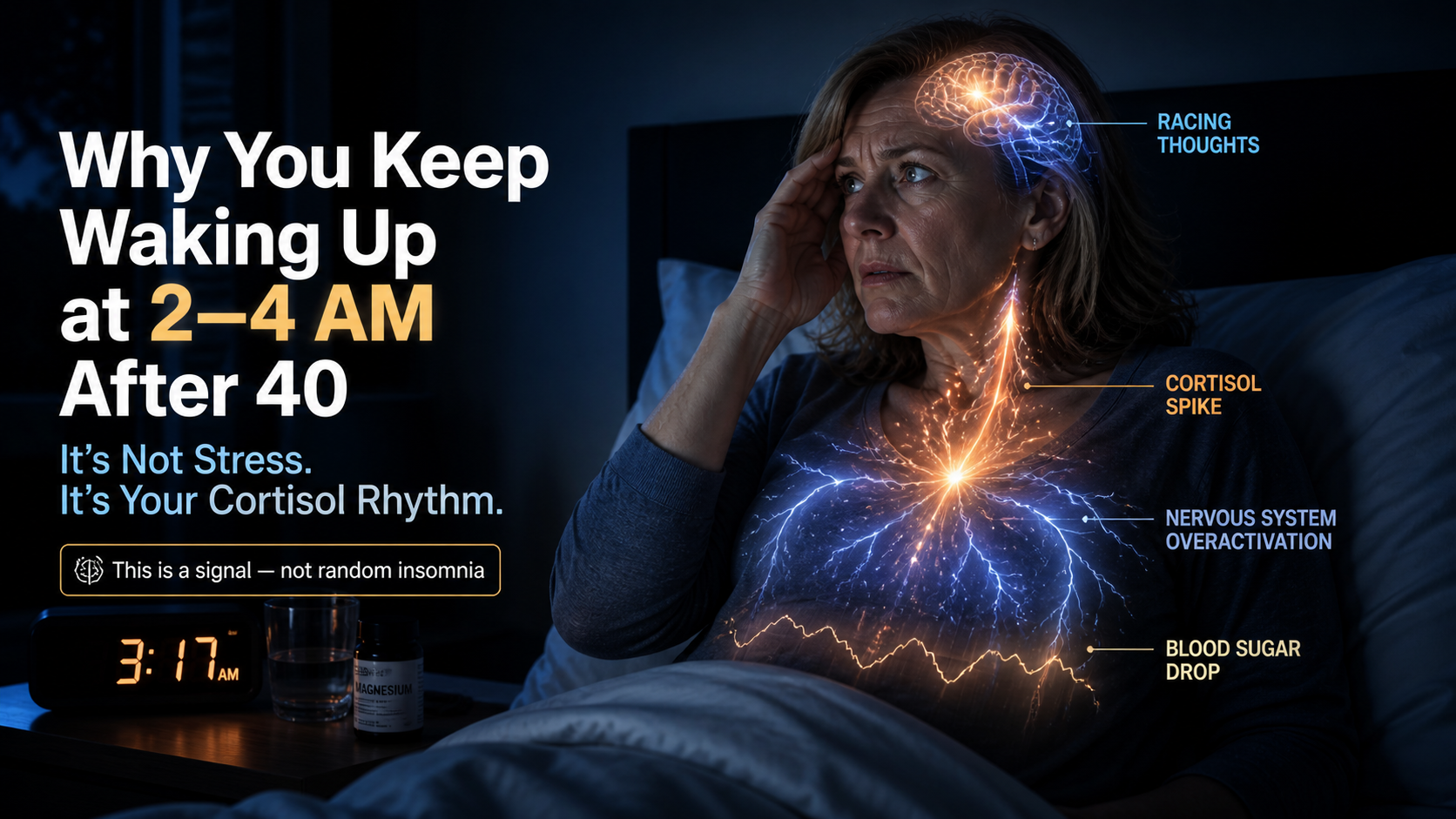
Let me be precise about what is happening. In a healthy younger adult, cortisol follows a clean circadian rhythm. It peaks shortly after waking to give you energy and focus for the day, then gradually declines throughout the afternoon and evening, reaching its lowest point at night so you can fall into deep, restorative sleep. After forty, that rhythm begins to flatten or even invert in many people. Morning cortisol is often lower than it should be, leaving you dragging yourself out of bed and relying on caffeine to function. Evening and nighttime cortisol stays elevated or spikes prematurely, leaving you wired but tired and pulling you out of deep sleep in the early morning hours. The result is a body that is constantly signaling danger even when there is no acute threat in your life.
Why does this shift occur? Three major physiological changes converge after forty. First, sex hormone production begins its slow but relentless decline. Estrogen and progesterone in women, testosterone in men — these hormones normally help regulate the HPA axis and buffer the effects of cortisol. When they drop, cortisol becomes relatively unopposed and its influence grows stronger. Second, insulin sensitivity decreases. Higher baseline insulin makes the adrenal glands more reactive, so even minor stressors produce bigger cortisol spikes, and those spikes last longer in the system. Third, the brain's feedback mechanisms that should shut off cortisol release become less sensitive. The hippocampus and prefrontal cortex, which normally tell the hypothalamus that enough cortisol has been released, start to lose efficiency with age and the chronic low-grade inflammation that often accompanies midlife. The result is cortisol that lingers far longer than it should.
The clinical consequences of this changed cortisol response are predictable, widespread, and devastating if left unaddressed. Patients develop visceral fat accumulation because cortisol tells the body to store energy around the organs for quick access in case of threat. Muscle breakdown accelerates because cortisol is catabolic by nature. Sleep architecture is disrupted because high nighttime cortisol blocks the deep restorative stages of sleep that the body needs for repair. Thyroid conversion efficiency falls because elevated cortisol impairs the conversion of T4 to active T3. Sex hormone balance is further disrupted because cortisol steals precursors from progesterone and testosterone production. Systemic inflammation rises and gut permeability increases, creating a vicious cycle that keeps the HPA axis in overdrive.
This is not simply "stress is bad." This is a fundamental change in how your body processes and recovers from stress after forty. Most conventional advice completely misses the mark. Doctors tell patients to meditate more or cut caffeine. Wellness influencers recommend adaptogens or breathing exercises. None of these approaches address the root physiological shift that has occurred. They treat the symptom of elevated cortisol without understanding why the stress response itself has changed. The result is patients who feel like they are failing at managing stress when in reality their body is operating under a completely new set of rules.
In the next section, I will show you exactly how the LCHPMF™ framework addresses this changed cortisol response at the root instead of just managing symptoms. The framework was built for exactly this midlife reality, and it works by restoring the conditions that allow your HPA axis to function the way it did before forty — with clean rhythm, proper shut-off signals, and full recovery between stress events.
Section 2: How LCHPMF™ Fixes the Cortisol Problem No One Explains After 40
The LCHPMF™ framework — Low Carb, High Protein, Moderate Fat — was developed precisely for the kind of midlife cortisol dysregulation I see every day in practice. It does not try to suppress cortisol or simply tell patients to lower their stress. It restores the internal conditions that allow the HPA axis to function the way it did before forty — with a clean daily rhythm, proper shut-off signals at night, and full recovery between stress events. The framework works by addressing the root physiological changes that cause cortisol to linger longer and recovery to become impaired.
The foundation of the framework is high-protein, low-carbohydrate eating. When you consistently hit the LCHPMF™ target of 1.8 to 2.2 grams of protein per kilogram of ideal body weight while keeping carbohydrates strategic and low, you stabilize blood sugar throughout the day and night. Stable blood sugar is the single most powerful way to reduce unnecessary cortisol secretion. Every time blood sugar crashes or spikes, the adrenals receive a false alarm to release more cortisol to bring glucose levels back up. Remove those false alarms and cortisol production drops naturally to appropriate levels without any need for forced suppression.
The 7-Day Protein Reset is the fastest way to demonstrate this principle in real time. Patients consume only high-quality animal protein and fats for seven days while keeping carbohydrates extremely low. The body finally receives the amino acids it has been missing, satiety returns, cravings disappear, and many patients experience their first full night of uninterrupted sleep in years. The high-protein meals provide the raw materials the adrenals need for proper recovery, while the low-carbohydrate approach prevents the blood sugar swings that keep cortisol elevated long after the stress event has passed.
The second pillar — carnivore-leaning nutrition — further supports cortisol regulation by prioritizing the most bioavailable sources of amino acids and healthy fats. Bone broth, collagen-rich cuts of meat, and connective tissue are rich in glycine and other calming amino acids that help down-regulate the nervous system and improve sleep quality. These are not trendy supplements; they are concentrated food sources that have been used therapeutically for centuries to support adrenal and nervous-system recovery. My patients use Designs for Health Bone Broth Protein and FIT Lean Food Collagen as daily staples precisely because they deliver concentrated, therapeutic levels of these peptide precursors in a form the midlife body can easily absorb and utilize.
Low-carbohydrate eating is the third pillar and creates the metabolic environment required for proper cortisol rhythm. Chronic high insulin and inflammation keep the HPA axis in overdrive. By strategically reducing carbohydrate intake, we lower insulin demand, reduce systemic inflammation, and allow the liver and gut to down-regulate glucose production. This is especially important for patients in the Cortisol Burnout archetype, where the assessment shows inverted or flattened cortisol patterns. The combination of low-carb and high-protein restores metabolic flexibility — the ability to switch cleanly between glucose and fat as fuel — which is a prerequisite for efficient cortisol regulation.
Metabolic flexibility training, circadian rhythm optimization, and nervous-system regulation complete the picture. Strategic time-restricted eating windows, consistent morning light exposure, and a hard cutoff for food and screens by ten at night tell the HPA axis when it is supposed to be active and when it is supposed to wind down. Most patients with midlife cortisol problems have lost this natural rhythm. LCHPMF™ rebuilds it systematically. When cortisol rhythm is restored, recovery between stress events improves dramatically. The body no longer stays in a low-grade alarm state twenty-four hours a day.
The gut-brain-hormone axis plays an outsized role here as well. Many patients with midlife cortisol problems also have gut permeability and dysbiosis. Repairing the gut with GI Balance and ProbioMax directly supports the body's ability to clear excess cortisol and produce calming neurotransmitters. Targeted supplementation enters the picture only where the free clinical assessment shows clear gaps. Adrenal Manager and OptiMag Neuro are two of the most commonly recommended products for this archetype because they support nervous-system regulation and magnesium repletion — two critical factors in restoring proper cortisol shut-off.
When these connected physiological domains operate together, patients experience the same benefits people hope for from adaptogens and meditation apps — but through a root-cause approach that actually fixes the changed stress response after forty. Cortisol rhythm normalizes. Nighttime wake-ups decrease. Recovery improves. Weight around the middle begins to release. Sleep becomes restorative again. This is not about managing stress. It is about giving the midlife body the exact inputs it now requires to regulate cortisol the way it was designed to.
In the final section, I will walk you through the exact implementation steps, including how to use the free clinical assessment to identify your specific cortisol-related archetype and receive your personalized LCHPMF™ starter protocol. This is where the rubber meets the road and where the cortisol problem no one explains after 40 finally begins to resolve.
Section 3: From Awareness to Action — Reclaiming Your Cortisol Rhythm After 40
Understanding the physiology is only the first step. The real transformation happens when you take the knowledge and turn it into a personalized, sustainable protocol. That is where the rubber meets the road for every patient I see, and it is why I built the free clinical assessment at Take the free Hormone & Metabolism Assessment as the entry point for anyone experiencing the cortisol problem no one explains after 40.
The assessment does not give generic advice. It maps your answers against the 14 primary midlife patterns I have identified over three decades — with Cortisol Burnout / HPA Axis Dysfunction being one of the most common. Within minutes you receive a Clinical Mirror Results report written in my voice that names exactly what your body is doing and why. More importantly, it hands you a starter protocol built from the LCHPMF™ framework that restores proper cortisol rhythm and recovery.
The gateway for most patients is the 7-Day Protein Reset. It is the fastest way to stabilize blood sugar, reduce false cortisol alarms, and begin rebuilding the amino acid reserves the adrenals need for proper recovery. For seven days you consume only high-quality animal protein and fats at the 1.8–2.2 grams per kilogram target while keeping carbohydrates extremely low. Patients routinely report dramatically better sleep, reduced evening anxiety, and the first noticeable drop in belly fat within that single week.
Once the reset is complete, we layer in the full pattern-first framework at the pace your archetype requires. If cortisol burnout is dominant, we stabilize the HPA axis first with Adrenal Manager and OptiMag Neuro before adding any additional hormone or thyroid support. Gut repair with GI Balance and ProbioMax comes early because leaky gut keeps the immune system and cortisol in a vicious cycle. Thyroid support follows because elevated cortisol impairs conversion. Only then do we address sex hormones or more advanced metabolic support.
The assessment flags any consult-required products so nothing is left to self-experimentation. For patients with complex patterns — cortisol plus thyroid plus estrogen dominance, for example — the Dynamic Weighted Priority Engine ensures the protocol follows the exact physiologic order I use in practice: cortisol first, gut second, thyroid third, sex hormones fourth.
I have watched thousands of patients in their forties, fifties, and sixties regain control of their bodies using this approach. They sleep through the night again. They lose the stubborn midsection fat that cortisol was driving. They regain the energy and resilience they thought had disappeared forever. These are not marketing stories. They are the daily reality of a practice built on LCHPMF™.
The cortisol problem after 40 is real, it is predictable, and it is highly reversible once you stop treating symptoms in silos and start rebuilding the system with the right map. Your archetype is that map. LCHPMF™ is the operating system.
The free clinical assessment at Take the free Hormone & Metabolism Assessment was built precisely for this moment. It takes four minutes, identifies your exact midlife pattern among the 14 primary midlife patterns, and gives you the personalized starter protocol that restores proper cortisol rhythm and recovery. From there the 7-Day Protein Reset gives you proof of concept, and the full framework delivers the lasting metabolic flexibility and resilience you thought was lost forever.
My book The Hormonal Blueprint expands on every principle in far greater detail, and the practitioner-grade supplement line on drjaywrigley.com was formulated specifically for these archetypes and the cortisol-recovery needs of midlife bodies.
If you are reading this and recognizing yourself in the description of the cortisol problem no one explains after 40, I invite you to take the assessment today. It costs nothing. It may be the first time your body finally feels understood. I read every result that comes through, and I stand behind the framework because I have watched it restore health to thousands of patients just like you.
The years after forty do not have to be defined by lingering cortisol, impaired recovery, and unexplained weight gain. They can be the beginning of a calmer, more resilient, more metabolically flexible second half of life.
The tools are here. The choice is yours.
Dr. Jay Wrigley, NMD
Trusted Supplements
The supplements referenced in this article are available through Dr. Jay's practitioner dispensary.
Professional-grade formulations — the same brands used in clinical practice. 15% off retail, permanently. No membership required.
Browse Trusted Supplements →