Why You Wake Up at 2–4AM After 40 (And What It Actually Means)
It is not just stress or aging. Your cortisol rhythm, blood sugar stability, hormonal signaling, and nervous system have all changed — and your sleep is the first place it shows up.
Section 1: The 2–4AM Wake-Up No One Explains After 40
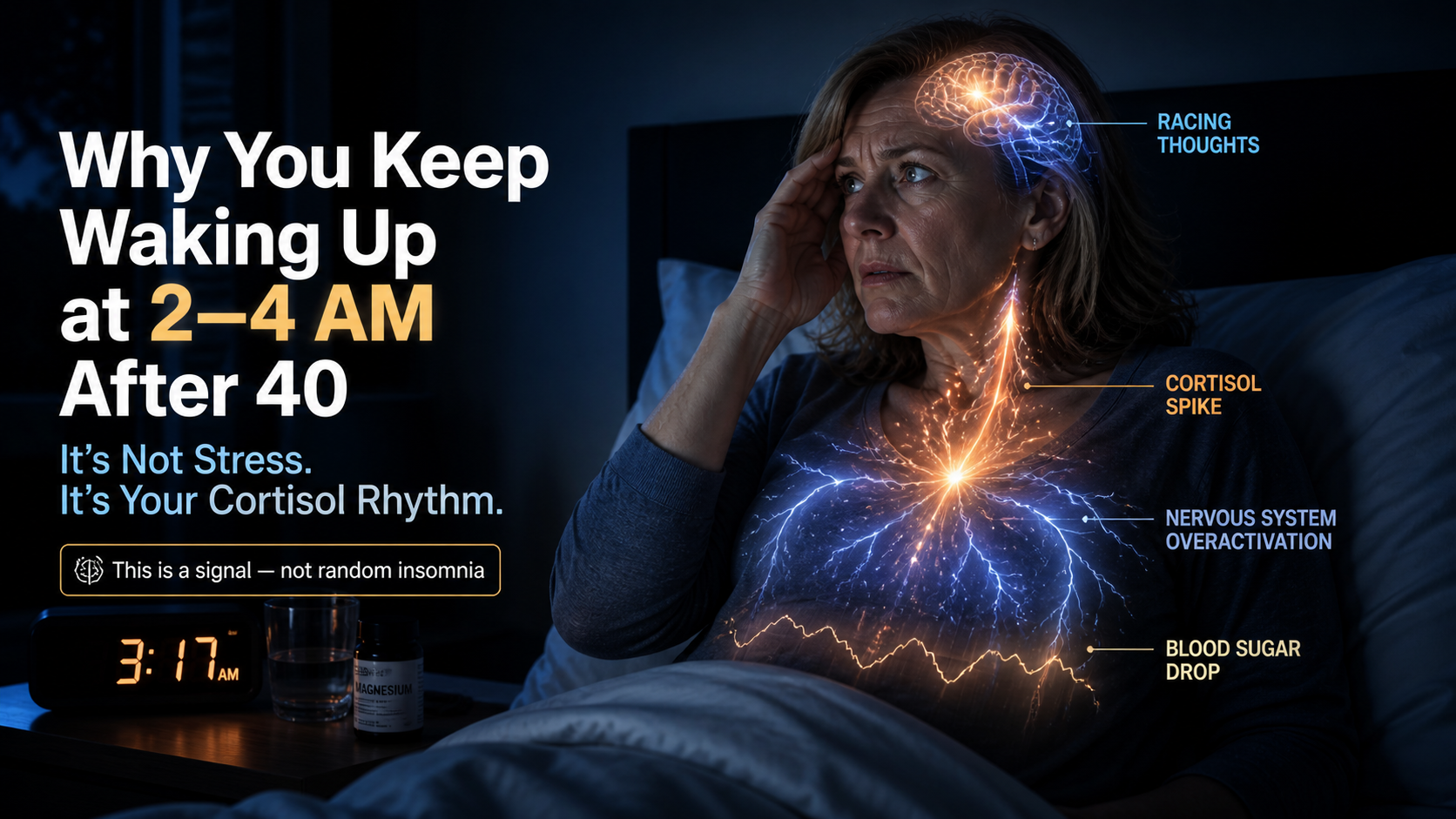
In my thirty-plus years as a board-certified naturopathic physician specializing in hormones and metabolism, the most consistent and heartbreaking complaint I hear from patients in their forties, fifties, and early sixties is the same one that greets me week after week in the exam room. They fall asleep without too much trouble, but between two and four in the morning they are suddenly wide awake, heart racing slightly, mind spinning with thoughts they cannot turn off, body tense even though nothing in their life feels acutely stressful. They lie there for an hour or two, finally drift back to sleep as the sun is coming up, and wake up exhausted, wired, and already dreading the next night. They tell me they have tried every sleep hygiene tip, every magnesium supplement, every dark room and cool temperature trick, and nothing seems to fix it. They feel like their body has turned against them in the middle of the night for no reason they can understand.
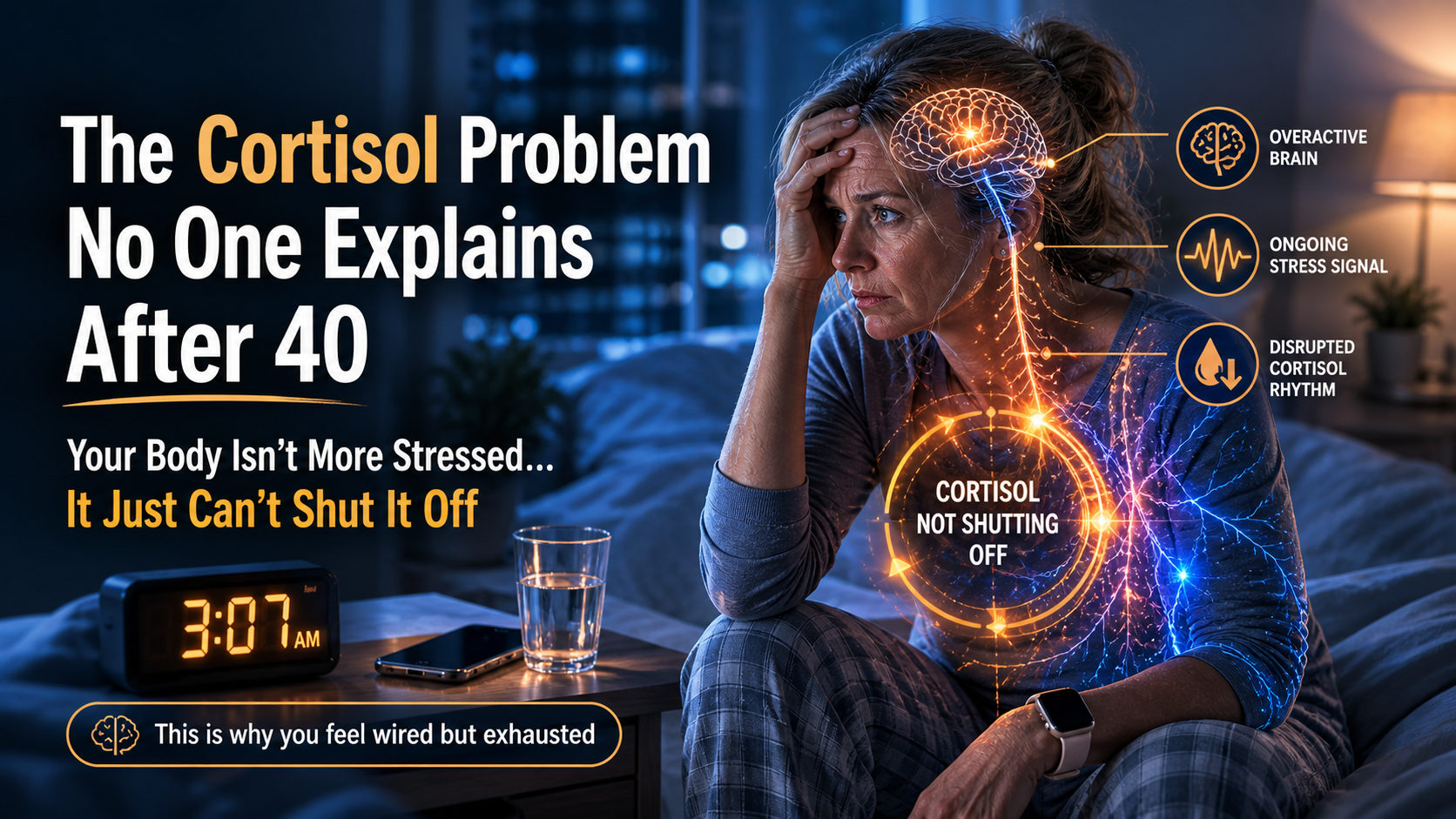
This is not random insomnia. It is not simply "stress." It is a predictable physiological signal that your cortisol rhythm, blood sugar regulation, hormonal signaling, and nervous system have all changed after forty. The 2–4 a.m. wake-up is one of the earliest and most reliable warning signs of the midlife cortisol problem no one explains. Cortisol is supposed to be at its lowest point in the middle of the night so you can stay in deep, restorative sleep. After forty, that rhythm often flattens or inverts. Cortisol stays elevated or spikes prematurely, pulling you out of deep sleep and into a low-grade alarm state. At the same time, blood sugar instability becomes more common. Declining insulin sensitivity and lower overnight glucose regulation cause a drop in blood sugar that triggers a cortisol release to bring glucose back up. The result is the same 3 a.m. awakening that so many patients describe as feeling like their body has flipped a switch and said it is time to worry.
The hormonal signaling changes amplify the problem. Falling progesterone in women and testosterone in men remove the natural calming effects these hormones once had on the nervous system. Progesterone in particular has a powerful GABA-like effect that helps the brain down-regulate at night. When it declines, the brain loses one of its most important brakes on the stress response. The nervous system stays in sympathetic dominance instead of shifting into parasympathetic recovery mode. The brain's ability to down-regulate the HPA axis weakens. The hippocampus and prefrontal cortex, which normally tell the hypothalamus that enough cortisol has been released, start to lose efficiency with age and the chronic low-grade inflammation that often accompanies midlife. The result is cortisol that lingers far longer than it should and wakes you up at the exact time your body should be deepest in repair.
I see this pattern so consistently that I can almost predict it from the intake form alone. A forty-eight-year-old woman who used to sleep through the night now wakes at three a.m. with her heart pounding and her mind racing about nothing in particular. A fifty-two-year-old man who never had sleep issues before now lies awake at two-thirty a.m. feeling wired even though he is exhausted. Their labs often come back looking normal. Their doctor tells them it is just aging or suggests they reduce stress or try an adaptogen. They leave the appointment feeling unheard and more confused than when they arrived. What they are experiencing is not random. It is a fundamental change in how their body processes and recovers from the normal stresses of daily life after forty.
The downstream effects are far-reaching. Poor sleep architecture means less growth hormone release, less cellular repair, less memory consolidation, and less regulation of appetite hormones the next day. The body becomes more insulin resistant. Cortisol stays elevated longer. The vicious cycle feeds itself. Patients gain weight around the middle, lose muscle tone, feel more fatigued during the day, and begin to lose confidence that anything will ever work again. This is why the 2–4 a.m. wake-up is such a powerful entry point into the entire midlife hormone and metabolism conversation. It is not just a sleep problem. It is an early warning signal that the rules have changed and the old strategies no longer apply.
In the next section, I will show you exactly how the LCHPMF™ framework addresses these root causes instead of masking the symptoms with sleep hygiene tips or temporary supplements. The framework was built for exactly this midlife reality, and it works by restoring the conditions that allow your body to stay in deep, restorative sleep again.
Section 2: How LCHPMF™ Restores Deep, Restorative Sleep After 40
The LCHPMF™ framework — Low Carb, High Protein, Moderate Fat — was developed precisely for the kind of midlife sleep disruption I see every day in practice. It does not try to force sleep with pills or breathing exercises. It restores the internal conditions that allow your body to stay in deep, restorative sleep naturally by addressing the four root causes that drive the 2–4 a.m. wake-up after forty: cortisol rhythm disruption, blood sugar instability, hormonal signaling changes, and nervous system dysregulation.
The foundation of the framework is high-protein, low-carbohydrate eating. When you consistently hit the LCHPMF™ target of 1.8 to 2.2 grams of protein per kilogram of ideal body weight while keeping carbohydrates strategic and low, you stabilize blood sugar throughout the day and night. Stable blood sugar is the single most powerful way to prevent the overnight glucose drop that triggers a cortisol release at two or three in the morning. The 7-Day Protein Reset is the fastest way to demonstrate this principle in real time. Patients consume only high-quality animal protein and fats for seven days while keeping carbohydrates extremely low. Many of them experience their first full night of uninterrupted sleep in years because the body finally has the amino acids it needs and the blood sugar stability it has been craving.
The second pillar — carnivore-leaning nutrition — further supports sleep by prioritizing the most bioavailable sources of amino acids and healthy fats. Bone broth, collagen-rich proteins, and connective tissue are rich in glycine and other calming amino acids that help down-regulate the nervous system and improve sleep quality. These are not trendy supplements; they are concentrated food sources that have been used therapeutically for centuries to support adrenal and nervous-system recovery. My patients use Designs for Health Bone Broth Protein and FIT Lean Food Collagen as daily staples precisely because they deliver concentrated, therapeutic levels of these calming precursors in a form the midlife body can easily absorb and utilize.
Low-carbohydrate eating is the third pillar and creates the metabolic environment required for proper cortisol rhythm at night. Chronic high insulin and inflammation keep the HPA axis in overdrive. By strategically reducing carbohydrate intake, we lower insulin demand, reduce systemic inflammation, and allow the liver and gut to down-regulate glucose production. This is especially important for patients who wake at 2–4 a.m. with a racing heart or racing mind. The combination of low-carb and high-protein restores metabolic flexibility — the ability to switch cleanly between glucose and fat as fuel — which is a prerequisite for efficient cortisol regulation and deep sleep.
Metabolic flexibility training, circadian rhythm optimization, and nervous-system regulation complete the picture. Strategic time-restricted eating windows, consistent morning light exposure, and a hard cutoff for food and screens by ten at night tell the HPA axis when it is supposed to be active and when it is supposed to wind down. Most patients with midlife sleep problems have lost this natural rhythm. LCHPMF™ rebuilds it systematically. When cortisol rhythm is restored, recovery between stress events improves dramatically. The body no longer stays in a low-grade alarm state twenty-four hours a day.
The gut-brain-hormone axis plays an outsized role here as well. Many patients with midlife sleep disruption also have gut permeability and dysbiosis. Repairing the gut with GI Balance and ProbioMax directly supports the body's ability to produce calming neurotransmitters and clear excess cortisol. Targeted supplementation enters the picture only where the free clinical assessment shows clear gaps. Adrenal Manager and OptiMag Neuro are two of the most commonly recommended products for this archetype because they support nervous-system regulation and magnesium repletion — two critical factors in restoring proper cortisol shut-off and deep sleep.
When these connected physiological domains operate together, patients experience the same benefits people hope for from sleep aids — but through a root-cause approach that actually fixes the changed physiology after forty. The 2–4 a.m. wake-ups decrease. Deep sleep returns. Energy becomes steady instead of wired-then-crashing. The body begins to heal itself during the night the way it was designed to.
Section 3: From Awareness to Action — Reclaiming Deep, Restorative Sleep After 40
Understanding the physiology is only the first step. The real transformation happens when you take the knowledge and turn it into a personalized, sustainable protocol. That is where the rubber meets the road for every patient I see, and it is why I built the free clinical assessment at Take the free Hormone & Metabolism Assessment as the entry point for anyone experiencing the 2–4 a.m. wake-ups that no one explains after forty.
The assessment does not give generic advice. It maps your answers against the 14 primary midlife patterns I have identified over three decades — with Cortisol Burnout / HPA Axis Dysfunction and related patterns being some of the most common. Within minutes you receive a Clinical Mirror Results report written in my voice that names exactly what your body is doing and why. More importantly, it hands you a starter protocol built from the LCHPMF™ framework that restores proper cortisol rhythm, blood sugar stability, hormonal signaling, and nervous system regulation so you can finally stay asleep through the night.
The gateway for most patients is the 7-Day Protein Reset. It is the fastest way to stabilize blood sugar, reduce false cortisol alarms, and begin rebuilding the amino acid reserves the body needs for proper overnight recovery. For seven days you consume only high-quality animal protein and fats at the 1.8–2.2 grams per kilogram target while keeping carbohydrates extremely low. Patients routinely report dramatically better sleep, reduced evening anxiety, and the first noticeable drop in belly fat within that single week.
Once the reset is complete, we layer in the full pattern-first framework at the pace your archetype requires. If cortisol rhythm disruption is dominant, we stabilize the HPA axis first with Adrenal Manager and OptiMag Neuro before adding any additional hormone or thyroid support. Gut repair with GI Balance and ProbioMax comes early because leaky gut keeps the immune system and cortisol in a vicious cycle. Thyroid support follows because elevated cortisol impairs conversion. Only then do we address sex hormones or more advanced metabolic support.
The assessment flags any consult-required products so nothing is left to self-experimentation. For patients with complex patterns — cortisol plus thyroid plus estrogen dominance, for example — the Dynamic Weighted Priority Engine ensures the protocol follows the exact physiologic order I use in practice: cortisol first, gut second, thyroid third, sex hormones fourth.
I have watched thousands of patients in their forties, fifties, and sixties regain control of their sleep using this approach. They sleep through the night again. They wake up refreshed instead of exhausted. They lose the stubborn midsection fat that cortisol was driving. They regain the energy and resilience they thought had disappeared forever. These are not marketing stories. They are the daily reality of a practice built on LCHPMF™.
The 2–4 a.m. wake-up after forty is real, it is predictable, and it is highly reversible once you stop treating symptoms in silos and start rebuilding the system with the right map. Your archetype is that map. LCHPMF™ is the operating system.
The free clinical assessment at Take the free Hormone & Metabolism Assessment was built precisely for this moment. It takes four minutes, identifies your exact midlife pattern among the 14 primary midlife patterns, and gives you the personalized starter protocol that restores deep, restorative sleep. From there the 7-Day Protein Reset gives you proof of concept, and the full framework delivers the lasting metabolic flexibility and resilience you thought was lost forever.
My book The Hormonal Blueprint expands on every principle in far greater detail, and the practitioner-grade supplement line on drjaywrigley.com was formulated specifically for these archetypes and the sleep-recovery needs of midlife bodies.
If you are reading this and recognizing yourself in the description of the 2–4 a.m. wake-up that no one explains after forty, I invite you to take the assessment today. It costs nothing. It may be the first time your body finally feels understood. I read every result that comes through, and I stand behind the framework because I have watched it restore health to thousands of patients just like you.
The years after forty do not have to be defined by fragmented sleep, lingering cortisol, and unexplained fatigue. They can be the beginning of a calmer, more resilient, more metabolically flexible second half of life.
The tools are here. The choice is yours.
Dr. Jay Wrigley, NMD
Trusted Supplements
The supplements referenced in this article are available through Dr. Jay's practitioner dispensary.
Professional-grade formulations — the same brands used in clinical practice. 15% off retail, permanently. No membership required.
Browse Trusted Supplements →