Cortisol Dysregulation: Hidden Driver of Midlife Fatigue
I see this pattern every single day in my practice, and it is one of the most misunderstood of the 14 core archetypes. A 48-year-old high-achieving woman sits across from me, exhausted, carrying extra weight around the middle, waking up at 3 a.m. with racing thoughts, and says, "I'm stressed, but who isn't at my age?" She hands me labs that show "normal" everything, yet she feels like her body is in constant low-grade fight-or-flight mode even though she is doing all the things she has always done to stay healthy.
This is cortisol dysregulation — not just "being stressed." It is a predictable physiological state that quietly wrecks metabolism, hormones, sleep, and longevity for millions of people over 40. And it is one of the 14 core archetypes I track because it sits at the center of so many other problems.
Why Cortisol Goes Wrong After 40
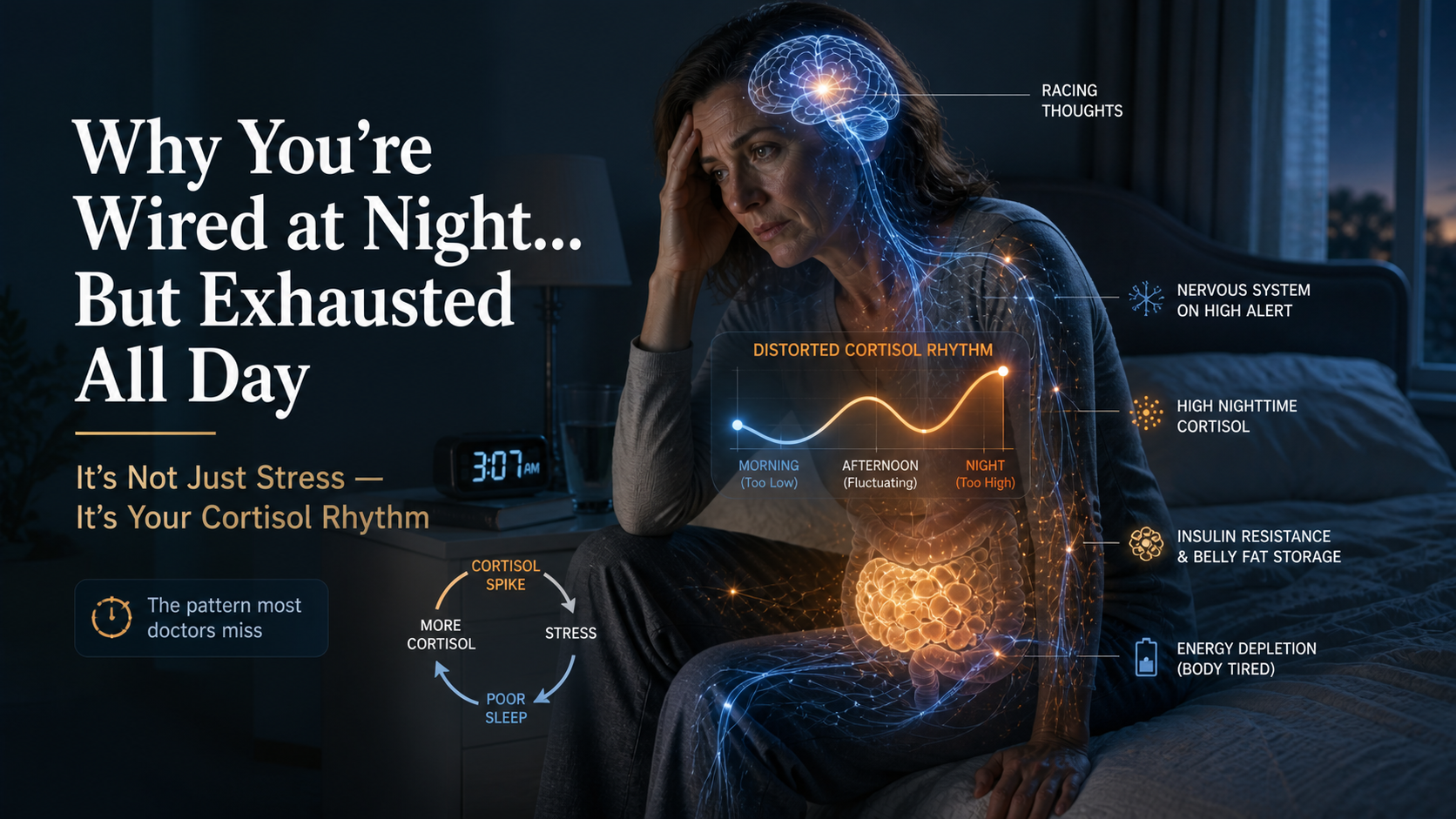
The HPA axis (hypothalamus-pituitary-adrenal) is designed for short bursts of cortisol in response to real, immediate threats. In midlife, the combination of declining progesterone (which normally acts as a major stress buffer), fluctuating estrogen, rising insulin resistance, poor sleep architecture, and the unrelenting demands of career, family, and life keeps the axis turned on 24/7. The result is a distorted cortisol curve: too high in the evening when it should be dropping, too low in the morning when you need energy, or completely flat and inverted patterns that destroy recovery and repair.
When cortisol stays dysregulated, it does three things that cascade into every other hormonal system:
- It promotes central insulin resistance and visceral fat storage, especially around the abdomen.
- It triggers the pregnenolone steal, diverting raw material away from progesterone and testosterone production.
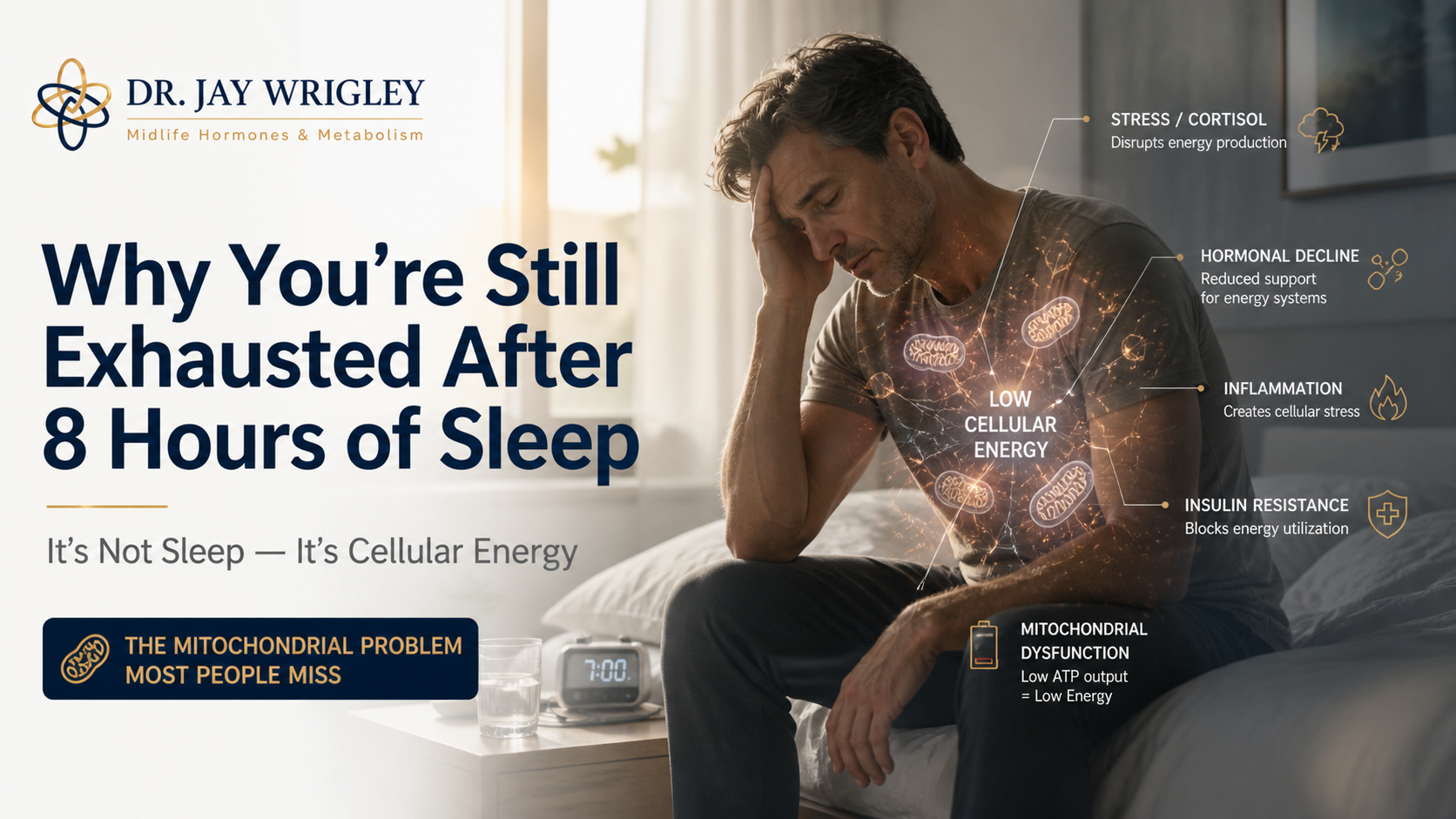
- It impairs thyroid hormone conversion (T4 to active T3) and mitochondrial function, slowing metabolism even further.
Patients often describe the feeling as "wired but tired" — physically exhausted yet mentally unable to relax or sleep. This is not laziness, poor willpower, or "just aging." It is biology responding exactly as it was designed to under chronic perceived threat. The body thinks it is still in survival mode, so it locks down energy, holds onto fat, and keeps the nervous system on high alert.
The Clinical Picture I Look For in Practice
- Frequent waking between 2–4 a.m. with a racing mind or anxiety
- Afternoon energy crash followed by an evening wired feeling or second wind
- New or worsening belly fat despite no change in diet or exercise habits
- Salt cravings or feeling light-headed when standing quickly
- Increased anxiety, irritability, or emotional reactivity to small stressors
- Slower recovery from workouts or even minor illness
- Sugar or carb cravings that feel almost uncontrollable in the late afternoon and evening
These are classic signs of a flattened or inverted cortisol rhythm. I confirm it with a DUTCH test, which gives the actual daily cortisol curve and metabolite patterns rather than a single morning number that can be misleading.
My Complete LCHPMF Approach to Cortisol Dysregulation
I never chase cortisol directly with supplements alone. I fix the upstream signals first because the HPA axis responds to the environment you create every single day.
The non-negotiable foundation is always the same:
- Protein anchoring every meal (40–50 g per meal) to stabilize blood sugar and remove the stress signal that drives cortisol release.
- Strategic carbohydrate timing — lower carbs in the morning and midday, nutrient-dense carbs in the evening to support serotonin and GABA production so the nervous system can down-regulate at night.
- Strict sleep timing and hygiene: last meal by 7 p.m., lights out by 10 p.m., consistent wake time even on weekends.
- Daily nervous-system down-regulation practices — even 10–15 minutes of breathwork, outdoor walking, or cold exposure makes measurable improvements in the cortisol curve within weeks.
Only after the foundation is solid do we layer targeted support based on the specific DUTCH pattern (high nighttime cortisol, low morning cortisol, or flat curve). The supplements I use are physician-grade and available at drjaywrigley.com with your automatic 15% patient discount.
Take the Assessment
The free 3-minute clinical assessment at Take the free Hormone & Metabolism Assessment will tell you immediately if cortisol dysregulation is one of your active archetypes. You will receive a full Clinical Mirror report written in my voice and instant access to LEO — my AI clinical assistant — who can walk you through the exact next steps, answer your questions, and adjust the plan in real time exactly as I would in a consult.
It takes 3 minutes and may finally explain why nothing has worked the way it used to — and give you the precise roadmap to fix it.
→ Start here: https://assessment.drjaywrigley.com
I read every single reply. Tell me what pattern the assessment shows for you. I'm here to help you get your energy, sleep, mood, and metabolism back under control.
— Dr. Jay Wrigley, NMD
Trusted Supplements
The supplements referenced in this article are available through Dr. Jay's practitioner dispensary.
Professional-grade formulations — the same brands used in clinical practice. 15% off retail, permanently. No membership required.
Browse Trusted Supplements →