Natural GLP-1 Optimization with the LCHPMF Framework
The GLP-1 conversation has dominated metabolic medicine for the last several years. Patients come into my office carrying prescriptions for Ozempic, Wegovy, or Mounjaro, and they ask the same question with a mixture of hope and hesitation: "Is this really the only way to feel full, control my blood sugar, and lose the weight that won't budge?" They have read the headlines, seen the before-and-after photos, and heard the promises of dramatic appetite suppression and rapid fat loss. But many are also experiencing side effects — nausea, muscle loss, fatigue, or the looming fear of what happens when they stop the medication.
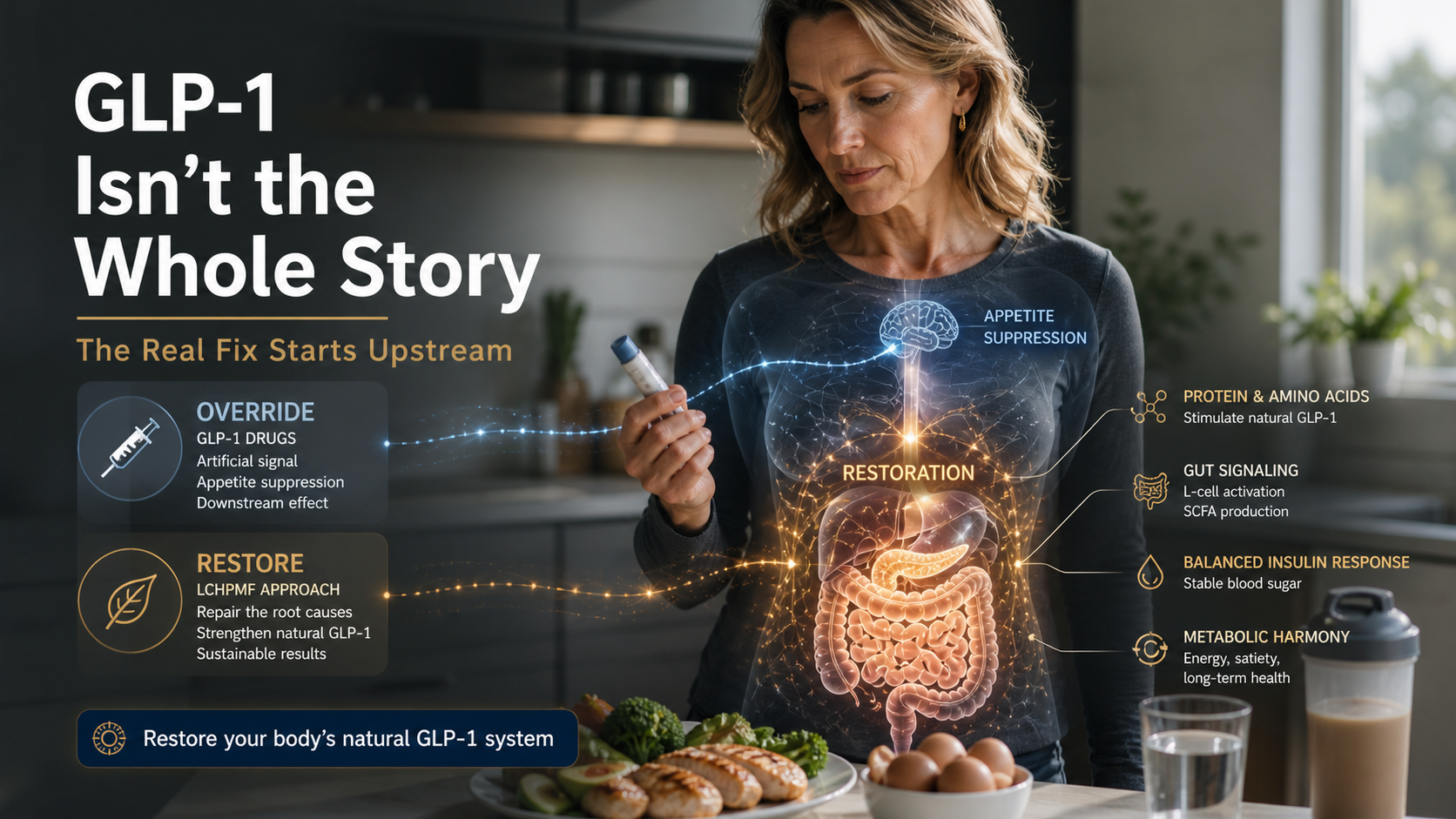
My answer is always the same, and it is rooted in 30 years of clinical observation: GLP-1 is a powerful signal, but it is a downstream signal. Pharmaceutical GLP-1 receptor agonists can override the system and produce impressive short-term results, but they do not fix the underlying metabolic dysfunction that caused the signaling to become impaired in the first place. True, sustainable metabolic health comes from restoring your body's own endogenous GLP-1 production and sensitivity.
That is exactly what the LCHPMF framework was engineered to do.
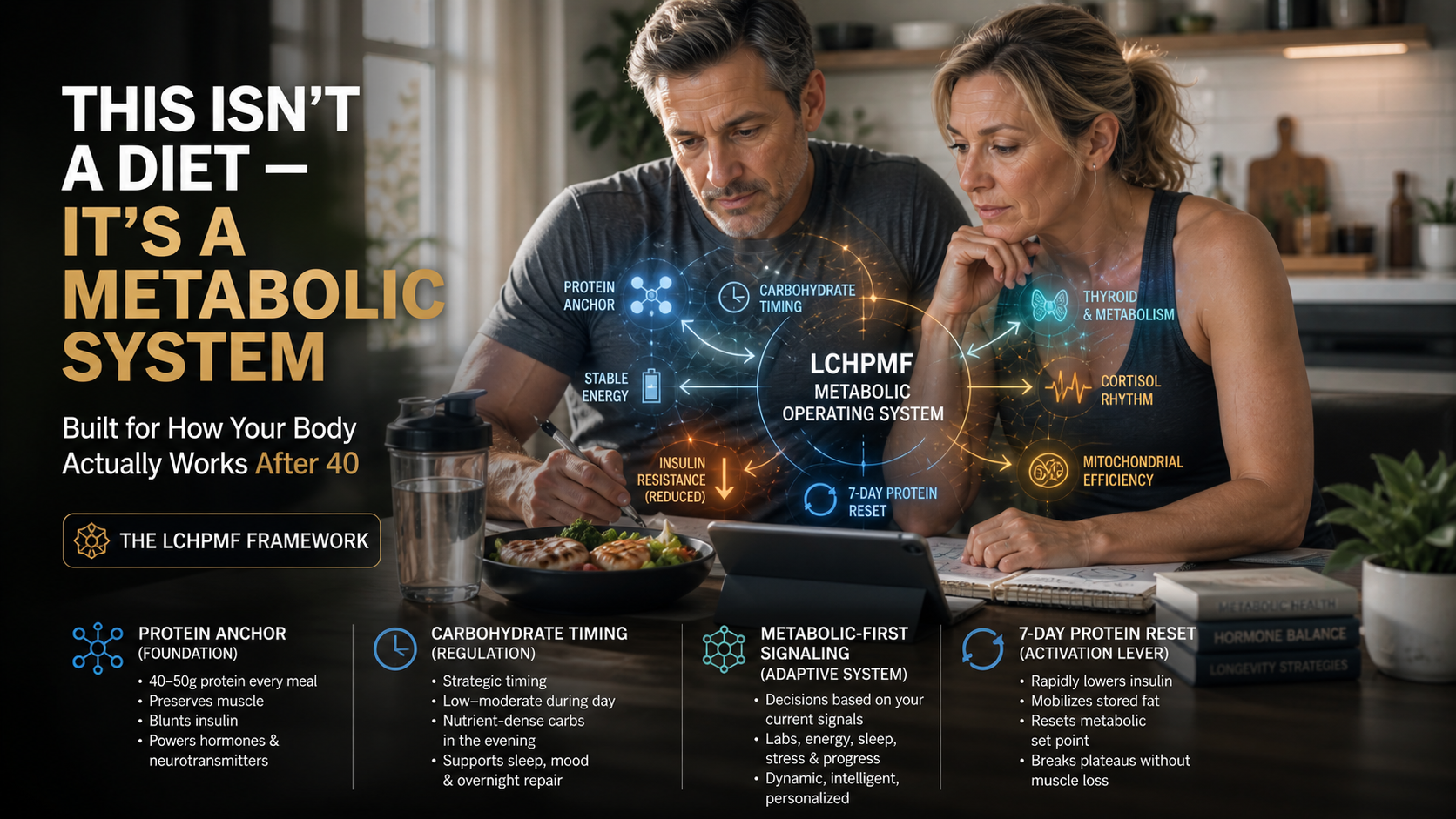
LCHPMF (Low Carb, High Protein, Moderate Fat) is not a "GLP-1 hack." It is a complete metabolic operating system specifically designed for the hormonal reality of adults after 40. One of its many downstream benefits is that it measurably enhances the body's natural GLP-1 pathways. It does this by correcting the upstream drivers that impair GLP-1 signaling — insulin resistance, gut dysbiosis, low protein intake, circadian disruption, and chronic energy toxicity.
This is not theory. This is what I see in my patients' labs, body composition scans, and clinical outcomes every week.

The Real Physiology of Endogenous GLP-1
GLP-1 (glucagon-like peptide-1) is an incretin hormone secreted primarily by L-cells in the distal small intestine and colon. Its physiological roles are elegant and multifaceted:
- It stimulates glucose-dependent insulin secretion from pancreatic beta cells.
- It suppresses glucagon release when blood sugar is elevated.
- It slows gastric emptying, allowing nutrients to enter the bloodstream more gradually.
- It signals the hypothalamus to increase satiety and reduce food intake.
- It improves beta-cell function and insulin sensitivity over time.
These effects are why synthetic GLP-1 receptor agonists have become blockbuster drugs. But here is the critical clinical distinction that most patients and many practitioners miss: pharmacologic GLP-1 agonists bypass the body's natural regulatory system rather than repairing it. They do not address why your own L-cells stopped producing or responding to GLP-1 effectively in the first place.
The upstream drivers of impaired endogenous GLP-1 signaling in midlife are well-documented in my practice:
- Chronic insulin resistance blunts L-cell sensitivity and reduces GLP-1 secretion.
- Gut dysbiosis and leaky gut impair L-cell function and short-chain fatty acid (SCFA) production, which is a major stimulus for GLP-1 release.
- Low dietary protein intake removes the strongest natural trigger for L-cell GLP-1 secretion.
- Circadian misalignment and poor sleep disrupt GLP-1 rhythms and insulin sensitivity.
- Energy toxicity from chronic caloric surplus creates signaling resistance at the cellular level.
LCHPMF directly targets every one of these drivers.
How LCHPMF Enhances Endogenous GLP-1 Signaling
The framework was never designed as a shortcut to mimic drug effects. It was designed as a complete metabolic reset. The fact that it powerfully supports natural GLP-1 production is simply one of its many clinical benefits.
Pillar 1 – High Protein Intake (The Strongest Natural GLP-1 Stimulator)
Protein, particularly whey and collagen peptides, is one of the most potent stimuli for L-cell GLP-1 secretion. When you anchor every meal with 40–50 g of high-quality protein, you directly trigger GLP-1 release, enhance satiety, slow gastric emptying, and reduce overall caloric intake without conscious restriction. This is the Protein Leverage effect in action, and it is the single most powerful natural lever we have for restoring endogenous GLP-1 signaling.
Pillar 2 – Strategic Carbohydrate Timing
By keeping carbohydrates low during the day when insulin sensitivity is poorest and placing nutrient-dense carbs in the evening, we reduce chronic insulin elevation while still supporting serotonin and overnight repair. Lower baseline insulin improves GLP-1 sensitivity. The gut L-cells function better when they are not constantly exposed to high insulin levels.
Pillar 3 – Gut Repair and Microbiome Optimization
LCHPMF deliberately includes gut-healing components (glutamine, zinc, targeted probiotics, viscous fiber). A healthy microbiome produces short-chain fatty acids (SCFAs) that directly stimulate L-cell GLP-1 secretion. Repairing gut integrity reduces systemic inflammation that otherwise blunts incretin signaling.
Pillar 4 – The 7-Day Protein Reset
This short, targeted intervention rapidly lowers insulin, mobilizes stored fat, and resets the metabolic set point. Many patients report a noticeable improvement in satiety and reduced cravings after completing a reset — a clinical sign that endogenous GLP-1 signaling is being restored.
Xymogen Products That Support Natural GLP-1 Pathways
Because every LCHPMF protocol already integrates Xymogen formulas, we can be very specific about which products best support this pathway:
- OptiCleanse GHI and FIT Lean Food Collagen provide high-quality, easily digested protein that directly stimulates GLP-1 release.
- Berberine improves insulin sensitivity, which enhances GLP-1 responsiveness.
- Fiber blends and prebiotic formulas increase SCFA production, one of the strongest natural triggers for L-cell GLP-1 secretion.
- Magnesium supports insulin signaling and overall metabolic flexibility.
- Liver support formulas improve bile acid signaling that modulates GLP-1 release.
These are not marketed as "GLP-1 boosters." They are the exact tools that support the metabolic environment endogenous GLP-1 depends on.
The Hybrid Strategy – For Patients Already Using Pharmaceutical GLP-1 Drugs
Many patients who come to me are already on Ozempic, Wegovy, or Mounjaro. They have experienced the powerful appetite suppression and weight loss these drugs can deliver, but they are also dealing with side effects: nausea, constipation, muscle loss, fatigue, or the nagging worry about what will happen when they eventually stop the medication. They want to know if there is a way to use the drug more intelligently or to prepare their body for a smoother transition off it.
LCHPMF does not oppose pharmaceutical GLP-1 agonists. It complements them. The framework gives the body the upstream metabolic support that these drugs bypass. When used together, the combination can preserve lean mass, reduce side effects, improve long-term outcomes, and make discontinuation far more successful.
The LCHPMF Hybrid Protocol for GLP-1 Drug Users
The goal is simple: protect muscle, maintain metabolic rate, support gut health, and restore natural satiety signaling so the body is not completely dependent on the external agonist.
Core Rules of the Hybrid Protocol:
- Protein intake remains non-negotiable at 40–50 g per meal. This is the single most important lever for preventing the muscle loss that is so common with GLP-1 drugs. High protein directly stimulates endogenous GLP-1 while also providing the amino acids needed to preserve lean mass during caloric deficit.
- Resistance training 3–4 times per week. Even light to moderate strength work sends the strongest possible signal to the body to hold onto muscle. Patients on GLP-1 drugs who add resistance training consistently lose far less muscle than those who rely on the drug alone.
- Strategic carbohydrate timing. Keep carbs low during the day to maintain the appetite-suppressing benefit of the drug, but include nutrient-dense carbs in the evening to support serotonin, recovery, and overnight repair.
- Electrolyte and micronutrient repletion. GLP-1 drugs often cause GI side effects that lead to dehydration and electrolyte imbalances. Magnesium, potassium, and sodium become critical.
- Periodic 7-Day Protein Reset cycles. Every 8–12 weeks, a short reset helps reset insulin sensitivity, reduce any adaptive slowdown, and give the gut a break from the drug's effects on gastric emptying.
- Gut support. Many patients on GLP-1 drugs develop slowed motility and dysbiosis. Targeted glutamine, zinc carnosine, and prebiotic fiber help maintain gut integrity and support natural GLP-1 production from the L-cells.
The Clinical Decision Tree
When a patient mentions GLP-1 drugs or related symptoms, here is how I approach the clinical decision:
- Mild to moderate metabolic dysfunction + high patient motivation → Prioritize the full natural LCHPMF pathway first. Many patients can achieve excellent results without the drug.
- Severe obesity + multiple failed lifestyle interventions → Consider a hybrid approach (LCHPMF + pharmaceutical GLP-1) under medical supervision.
- Already on GLP-1 medication → Focus on muscle preservation, metabolic support, and planning for eventual discontinuation. The goal is to make the drug a temporary tool rather than a permanent crutch.
Real Patient Outcomes – The Hybrid Approach in Practice
One 54-year-old woman came to me after six months on semaglutide. She had lost 28 pounds but was also losing muscle, felt constantly fatigued, and was terrified of the rebound weight gain she had heard about. We added the LCHPMF hybrid protocol: 45 g protein per meal, resistance training three times per week, magnesium and electrolyte support, and a 7-Day Protein Reset every 10 weeks. Over the next four months she lost another 11 pounds of pure fat, regained 4 pounds of muscle, and reported her energy was better than it had been in years. She is now successfully tapering off the medication while maintaining her results.
A 49-year-old man on tirzepatide had excellent weight loss but developed significant GI side effects and stalled progress. After implementing the hybrid LCHPMF protocol his GI symptoms improved within three weeks, his energy stabilized, and he was able to continue losing fat while preserving muscle. He told me, "The drug got me started, but LCHPMF is what's letting me keep going."
Lab Context and Monitoring for GLP-1 Optimization
For any patient interested in natural or hybrid GLP-1 optimization I order:
- Fasting insulin, HOMA-IR, and HbA1c to assess insulin sensitivity
- DUTCH Complete to evaluate cortisol rhythm and sex hormone balance
- Full thyroid panel including Free T3 and Reverse T3
- hsCRP and other inflammatory markers
- Optional advanced gut and microbiome testing
The Complete LCHPMF GLP-1 Optimization Protocol
Protein Anchoring
Every meal starts with 40–50 grams of high-quality protein. Choose from whey isolate, collagen peptides, egg whites, chicken breast, turkey, white fish, or lean beef. This single habit provides the strongest natural stimulus for L-cell GLP-1 secretion, blunts insulin, preserves muscle, and creates profound satiety.
Carbohydrate Timing
Keep carbohydrates low to moderate during the day when insulin sensitivity is poorest. In the evening, include a nutrient-dense source such as ½ cup cooked sweet potato, 1 cup berries, or a small serving of rice. This timing supports serotonin production and overnight repair without driving daytime insulin spikes that blunt GLP-1 sensitivity.
Fat as a Calibrated Tool
Use healthy fats (olive oil, avocado, nuts in moderation) for cooking and satiety, but never as the dominant macronutrient. Excess fat in the presence of insulin resistance can create energy toxicity and impair GLP-1 signaling.
Meal Timing and Fasting Window
Last meal by 7 p.m. Lights out by 10 p.m. This creates a natural 12–14 hour overnight fast that allows insulin to return to baseline and supports natural GLP-1 rhythm. For patients who tolerate it well, I often recommend extending the fasting window to 14–16 hours a few days per week.
The 7-Day Protein Reset
Used strategically every 8–12 weeks or when progress stalls. During the reset, consume only lean protein sources (whey isolate, egg whites, chicken breast, white fish), minimal fat, and zero added carbohydrates. This rapidly lowers insulin, mobilizes stored fat, resets the metabolic set point, and gives the GLP-1 signaling system a powerful reset.
Daily Movement and Nervous System Regulation
30–45 minutes of walking or light resistance training daily. Add 10 minutes of breathwork or meditation to down-regulate the nervous system. Chronic stress elevates cortisol, which impairs GLP-1 sensitivity. Restoring nervous system balance is essential.
Common Pitfalls When Patients Try to Optimize GLP-1 Naturally
- Going too low-carb too fast and triggering stress hormones that blunt GLP-1
- Not eating enough protein and missing the strongest natural stimulus
- Ignoring gut health and expecting GLP-1 signaling to improve in a damaged microbiome
- Relying on willpower instead of signal-based eating (LCHPMF)
The framework prevents these mistakes by giving the body the right inputs in the right order.
Your Personal Starting Point
The assessment at Take the free Hormone & Metabolism Assessment now includes targeted questions that evaluate your current GLP-1 related signaling (protein intake, satiety patterns, meal timing, cravings, gut symptoms, fasting comfort). It will identify which of the 14 archetypes are active in your body and give you a full Clinical Mirror report written in my voice. You will also receive immediate access to LEO — my AI clinical assistant — who can answer your questions and guide you through the exact LCHPMF GLP-1 optimization protocol tailored to your pattern.
→ Start your free 3-minute assessment here
I read every single reply. Tell me what pattern the assessment shows for you. I'm here to help you optimize your metabolism the right way — whether you choose to use pharmaceutical tools or not.
This is the definitive clinical guide to natural GLP-1 optimization through the LCHPMF framework. It is not anti-drug. It is pro-root-cause. It is the approach I use with my own patients every day.
Welcome to the other side of the GLP-1 conversation.
— Dr. Jay Wrigley, NMD
Boost your body's natural GLP-1 without medication. The LCHPMF framework enhances satiety, blood sugar, and fat loss naturally.Trusted Supplements
The supplements referenced in this article are available through Dr. Jay's practitioner dispensary.
Professional-grade formulations — the same brands used in clinical practice. 15% off retail, permanently. No membership required.
Browse Trusted Supplements →