Gut-Hormone Axis: Bloating, Anxiety & Weight Gain
Many patients tell me their symptoms feel connected in a way their doctors don't acknowledge: bloating and digestive issues, anxiety or mood swings, and hormonal symptoms all worsening at the same time.
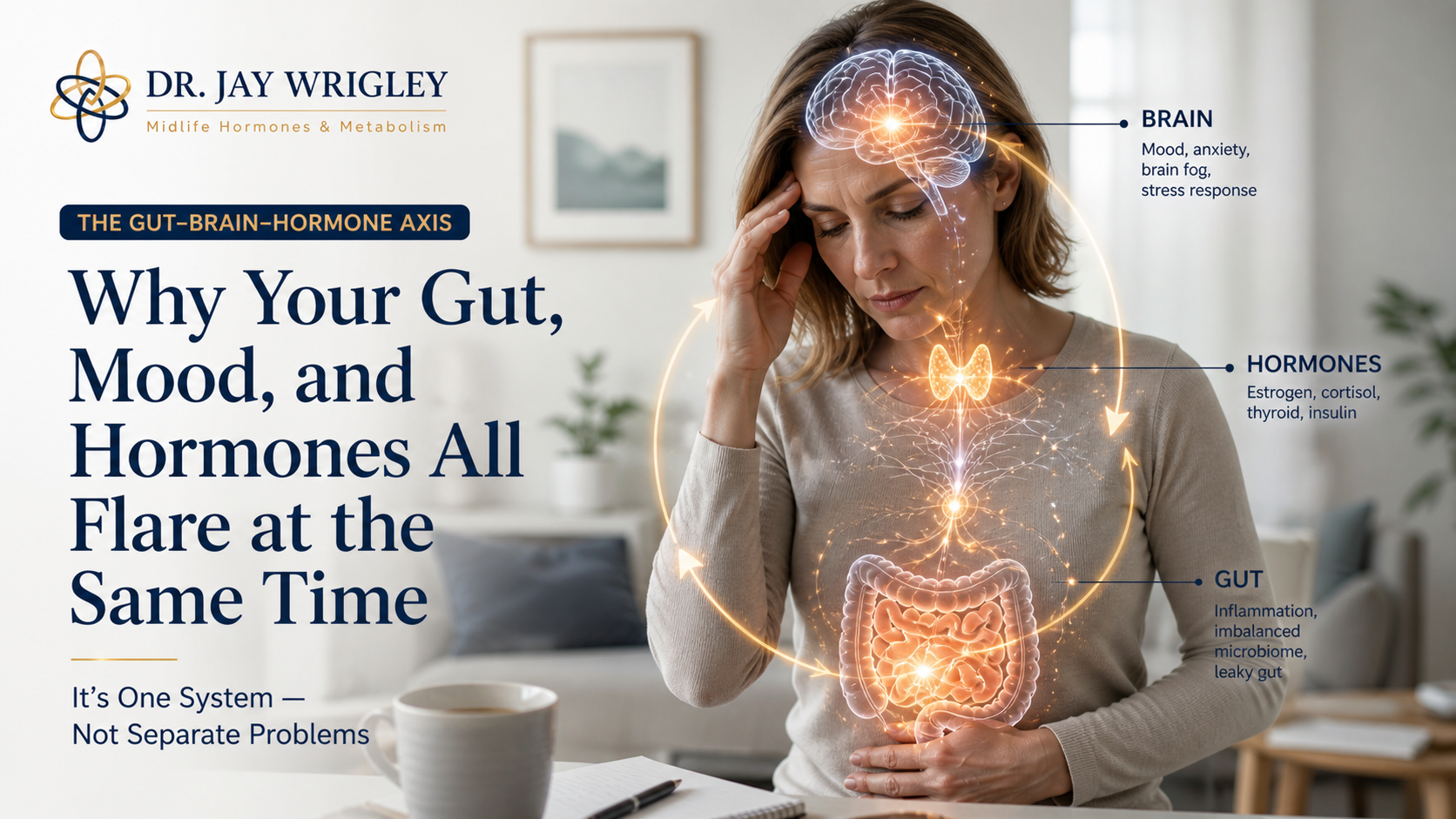
This is the Gut-Brain-Hormone Axis — one of the 14 core archetypes and one of the most interconnected patterns I treat.
How the Axis Works
The gut, brain, and hormones talk to each other constantly through the vagus nerve, neurotransmitters, and the estrobolome (the gut bacteria that metabolize estrogen). When the gut is inflamed or permeable, it disrupts:
- Serotonin production (90% is made in the gut)
- Estrogen recirculation
- Cortisol regulation
- Thyroid conversion
The result is a vicious cycle where gut issues worsen hormonal symptoms and hormonal imbalance worsens gut issues.
Clinical Signs I Look For
- Bloating, gas, or irregular bowels
- Anxiety, irritability, or mood swings
- Hormonal symptoms that worsen with digestive flares
- Brain fog that improves or worsens with meals
My LCHPMF Approach
I always start with gut repair as part of the foundation:
- Protein anchoring for stable blood sugar
- Strategic carbohydrates to reduce fermentation
- Targeted gut support (probiotics, glutamine, zinc carnosine, etc.)
- Cortisol rhythm restoration (because stress destroys the gut lining)
The free 3-minute assessment at Take the free Hormone & Metabolism Assessment will tell you if the Gut-Brain-Hormone Axis is one of your active patterns. You'll receive a personalized report and immediate access to LEO for real-time guidance.
Supplements I recommend for this pattern are available at drjaywrigley.com with your 15% patient discount.
Take the Assessment
It takes 3 minutes and may finally connect the dots between your gut, brain, and hormones.
→ Start here: assessment.drjaywrigley.com
— Dr. Jay Wrigley, NMD
Trusted Supplements
The supplements referenced in this article are available through Dr. Jay's practitioner dispensary.
Professional-grade formulations — the same brands used in clinical practice. 15% off retail, permanently. No membership required.
Browse Trusted Supplements →